
At a Glance
- A snap button is four pieces, not one: cap, socket, stud and post.
- Cap sizes run 10mm to 20mm. 15mm is the default for jackets and shirts.
- Ring snaps suit light fabric, S spring snaps suit heavy fabric, prong snaps suit babywear.
- They need two layers of fabric and usually interfacing. They do not belong on loose knits.
- Sew on snaps exist for garments you cannot punch a hole through.
What Are Snap Buttons?
A snap button, also called a press stud or snap fastener, closes by pressure instead of by passing through a buttonhole. Press the two halves together and a spring or a ring inside holds them shut until you pull hard enough to pop it open.
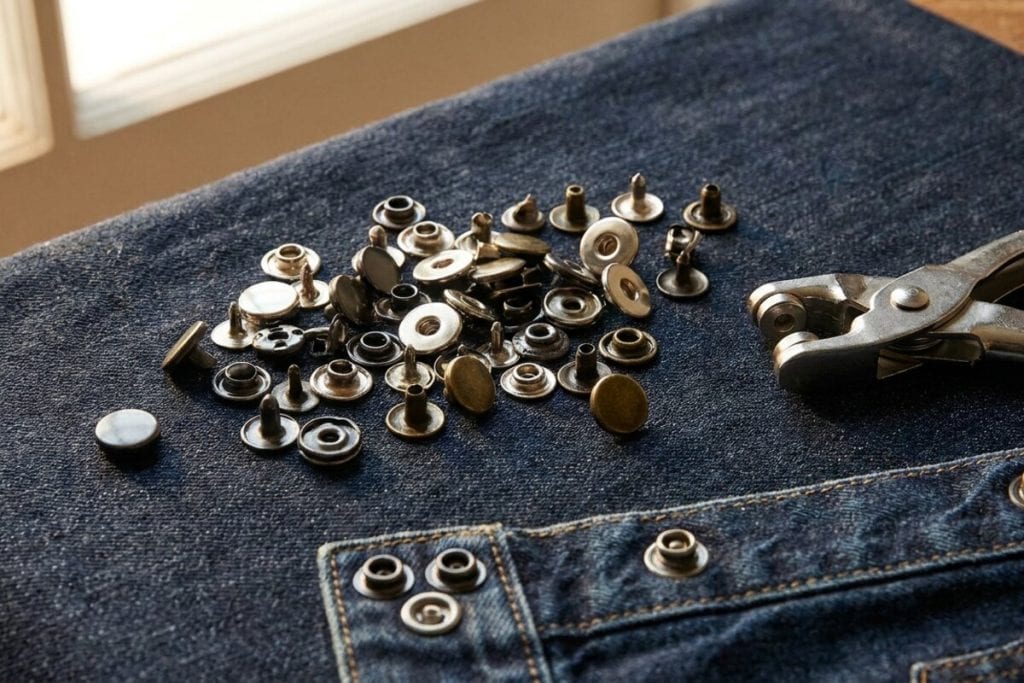
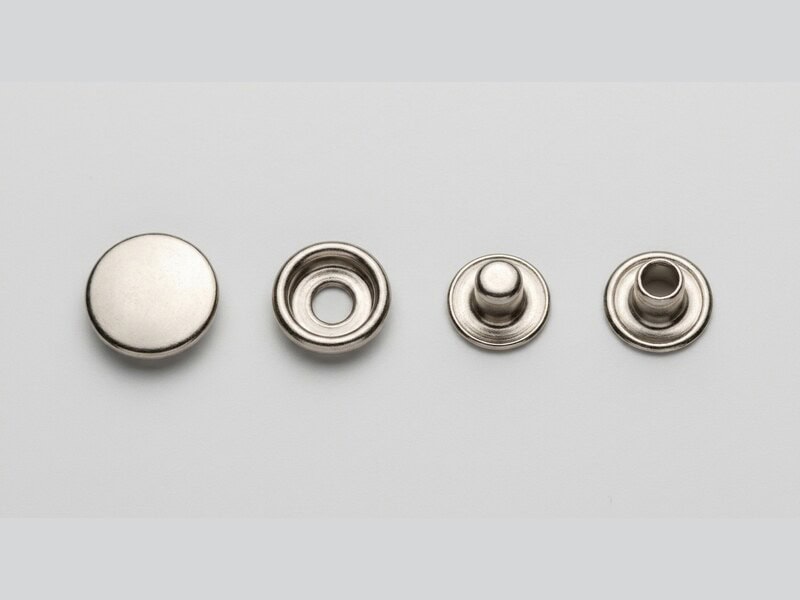
Every snap is four separate pieces. The cap is the decorative face you see on the outside. Behind it sits the socket, which is the female half. On the other side of the opening you have the stud, the male half, and behind that the post or eyelet that clamps through the fabric and locks into the stud. Buy them as a set. Mixing caps and studs from different suppliers almost never works, because the post length and the socket depth are not standardised across factories.
If you are still deciding between a snap and a conventional button, start with the comparison in sew through versus shank buttons, then come back here. The broader button buying guide covers how all the categories relate.
Snap Buttons or Sewn Buttons?
Snaps are usually sold as the easy option. They are not. A sewn button takes five minutes, a needle and nothing else, and if you put it in the wrong place you unpick it and move it. A snap requires a tool, and setting one means punching a hole through the garment. Get the placement wrong by 5mm and you have a permanent hole in the fabric and a snap that pulls crooked for the rest of the garment’s life.
What snaps are genuinely better at is speed of use and repetition. A child’s jacket that gets opened and closed twice a day, a work shirt with eight closures, a duvet cover, a bag flap. Anything where a buttonhole would stretch out and go slack inside a year.
Use snaps for function. Use buttons where the fastening is part of how the garment looks, which is most of the time on coats and tailoring.
What Types of Snap Buttons Are There?
Ring snaps
The socket holds a flat wire ring. Light, slim, and the gentlest on fabric. Correct for shirting, poplin, light cotton and thin synthetics. They open with little force, which is why you do not want them on anything load bearing.
S spring snaps
An S shaped spring inside the socket instead of a ring. Much stronger grip, noticeably louder snap, and the standard on workwear, denim jackets and outerwear. If a snap keeps popping open on its own, this is usually the fix.
Prong snaps
The ones with four small teeth that bite through the fabric. Made for babywear and jersey, because the prongs spread the load instead of punching a single hole. They need fabric under about 4oz to set properly. On anything heavier the prongs bend rather than pierce.
Post and socket snaps
Also called tack buttons or jeans buttons. A solid post driven through a pre punched hole, used on denim waistbands. These are not interchangeable with the above and need a different die.
Sew on snaps
Two flat discs with stitch holes around the rim. No tools, no holes, no hardware showing on the face. These are the answer for silk, leather, loose weaves and anything vintage you are not willing to punch. Weaker than a set snap, but you can place them anywhere and remove them without a trace. Our metal snap buttons cover the common sizes.
What Size Snap Buttons Do You Need?
Snaps are measured by the cap diameter in millimetres, sometimes by line size in catalogues. The button size guide explains how line and millimetre conversions work across all button types.
- 10mm to 12.5mm: babywear, lightweight shirts, doll clothes, small pouches
- 15mm: the general purpose size. Shirts, jackets, bags, most repairs
- 17mm to 20mm: outerwear, workwear, heavy canvas, anything with a visible hardware look
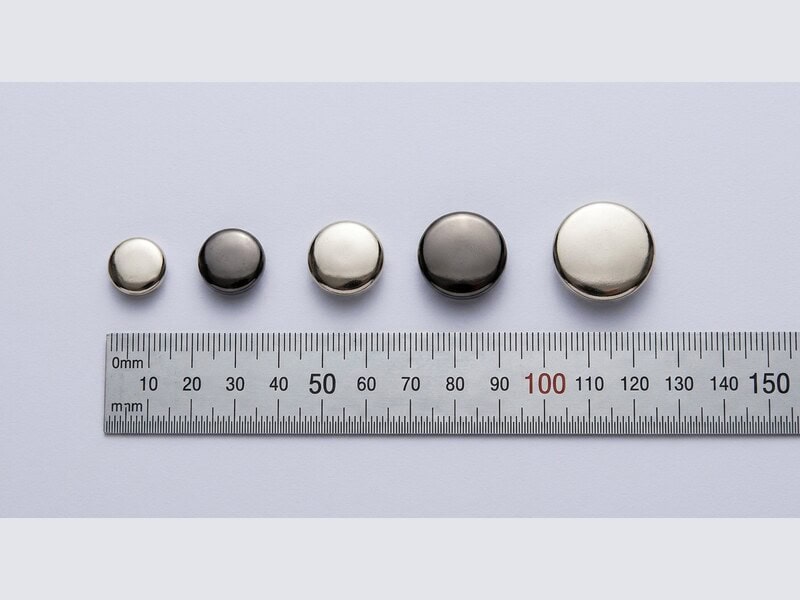
When in doubt, go 15mm. It is the size most dies are sold for, which matters more than it sounds. If you buy an unusual size and the tool does not match it, the snap will set crooked every time.
Check the post length against your fabric before ordering. Two layers of medium cotton need roughly a 5mm post. Heavy canvas or a padded jacket may need 8mm or more, and a post that is too short simply will not lock.
What Are Snap Buttons Made Of?
Almost all of them are brass or steel, plated. Brass is softer, sets more cleanly and corrodes less, which is why better snaps are brass even when the finish looks identical. Steel is cheaper and harder, and will rust at the punched hole if the plating gets scratched in setting.
Finish matters more on snaps than on sewn buttons, because the cap is the only part anyone sees. Nickel, gunmetal, antique brass and matte black are the common ones. Antique brass and gunmetal hide wear best on workwear; bright nickel shows every scuff. The metal buttons guide goes into plating durability, and the antique bronze finish guide covers how the aged look is produced and how it ages in use.
If you want the snap to disappear instead of announcing itself, pick a cap in a finish close to the fabric colour, or use a plain dome metal button as a decorative cover elsewhere on the garment so the hardware looks intentional.
Which Fabrics Can Take a Snap?
This is the question that decides whether the job works, and most guides skip it.
You need at least two layers of fabric at the closure, and in practice you want interfacing as well. Cut the interfacing about 10mm wider than the cap on all sides. Without it, the snap becomes a hinge point and the fabric tears in a ring around the hardware, usually within a season.
Do not put set snaps in loose knits, open weaves, single layer jersey or anything that frays. The hole does not stay a hole, it becomes a ladder. Knitwear takes sewn buttons, and a cardigan style placket is the clearest example of where snaps go wrong.
Leather and coated fabric are the opposite problem: they take a snap beautifully but will not forgive a mistake, because the hole cannot close up again. Mark twice.
How Do You Attach Snap Buttons?
- Fasten the garment the way it should sit and mark both halves at the same time through both layers. Marking them separately is the single most common cause of misalignment.
- Fuse or stitch interfacing behind both marks.
- Punch the hole with an awl or a hole punch, not scissors. A cut hole has corners and corners tear.
- Put the cap face down in the die, push the post through from the right side, drop the socket on, and press.
- Press slowly and check halfway. Once it is fully set you cannot take it back out without destroying the fabric.
- Test with a firm pull before you do the rest. One trial snap on a scrap of the same fabric is worth the two minutes.

On tools: skip the hammer and die kit. It is the cheapest option and it is also the reason most home set snaps sit crooked, because nothing holds the pieces square while you swing. A basic hand press or a decent pair of snap pliers costs a little more and sets them straight every time. If you are doing more than about twenty, buy the press.
If the garment cannot be punched at all, sew on snaps go in with a needle and the technique is the same as any small sew through fastener, which is covered step by step in how to sew on a button.
Why Do Snap Buttons Fail?
- The post was too short for the fabric thickness, so the stud never fully locked. Most common fault by a distance.
- No interfacing, so the fabric gave way around the hardware rather than the snap giving way.
- Caps and studs from different sets. The tolerances look close and are not.
- Over pressing. Crushing the post flat deforms the spring inside and the snap holds for a week.
If the hardware is fine and only the fabric is torn, a patch behind the hole plus a fresh snap 10mm to one side usually saves the garment. See replacement buttons for matching a set when you can only replace some of them.
How Do You Care for Snap Buttons?
- Close every snap before washing. An open cap catches on other garments and bends the ring.
- Dry fully. Water sits in the socket cavity longer than you would expect, and that is where cheap steel starts to rust.
- Do not iron directly over a cap. The metal holds heat and will scorch the fabric around it.
- If a snap starts opening by itself, squeeze the socket very slightly with pliers before replacing it. Often that is all it needs.
Frequently Asked Questions
What is the difference between a snap button and a press stud?
Nothing. Press stud is the British term, snap button and snap fastener are the American ones.
Can I attach snap buttons without a tool?
Not set snaps. Use sew on snaps instead, which need only a needle and thread.
What size snap is standard?
15mm caps for general garment use, 12.5mm for babywear and light shirts, 17mm to 20mm for outerwear.
Can snap buttons be removed?
Yes, by drilling out or prying off the cap, but the fabric keeps the hole. Plan placement as if it were permanent.
Are snaps strong enough for a coat?
S spring snaps are, on a canvas or denim coat. On a heavy wool coat the weight of the fabric works against the closure, so sewn buttons remain the better choice.
Rule of Thumb
15mm cap, S spring for anything heavier than shirting, interfacing behind both halves, and one test snap on a scrap before you touch the garment.
Where to Buy Snap Buttons
We stock snap buttons alongside sewn metal fastenings in the Shancco shop, including metal snap buttons in the standard sizes and matching plain metal buttons such as hammered metal buttons and minimalist solid metal buttons if you want the rest of the garment to read as one set.
Can You Buy Snap Buttons Wholesale?
Yes. Snap buttons are available for wholesale and bulk orders with trade pricing for workwear makers, childrenswear brands, bag makers and repair studios, and we can supply matching caps across several finishes from one order. More on how we work with trade customers is on the button manufacturer and wholesale supplier page, or get in touch for a wholesale quote.
Get in Touch
Tell us the fabric and how many layers sit at the closure and we will tell you the cap size and post length you need. Contact Shancco.
Recommended Reading
- Sew Through vs Shank Buttons
- Metal Buttons
- Button Size Guide
- Replacement Buttons
- How to Sew On a Button
- Button Covers Guide