
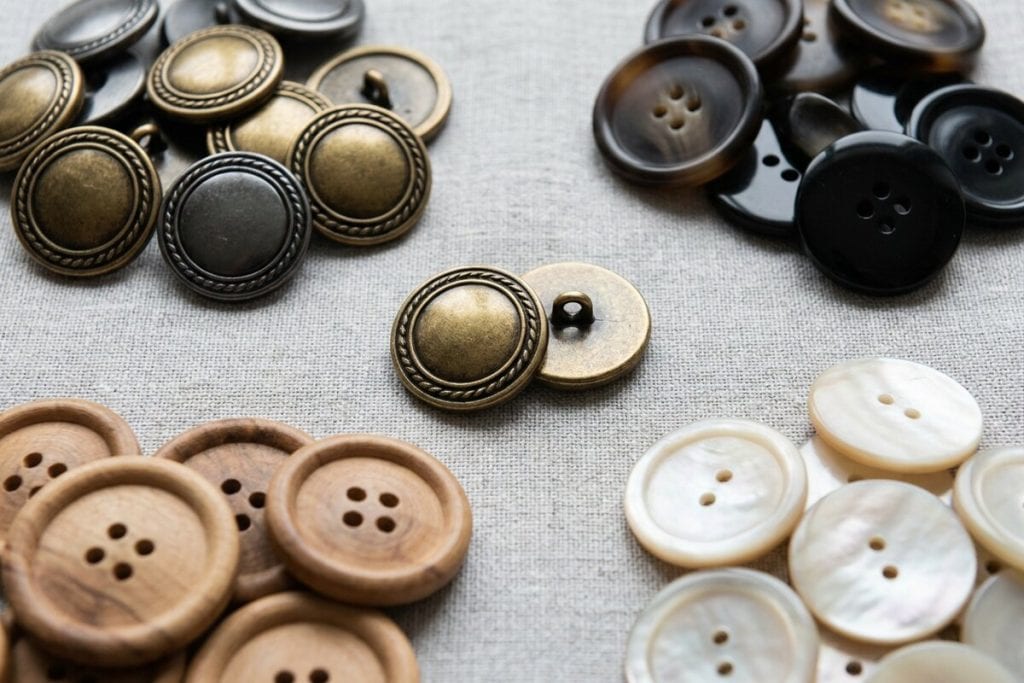
Quick answer: Coat buttons are the larger, heavier buttons used on outerwear, normally 20mm to 30mm across the front of a coat with smaller 15mm to 18mm buttons on the cuffs. They come in metal, resin, natural wood and shell, with either a shank back or sew-through holes, and swapping a set is the cheapest way to change how a coat reads.
A coat button has a harder job than any other button on your wardrobe. It carries the weight of wool or twill, gets fastened with cold hands, and sits exactly where the eye lands when someone walks toward you. That is why a coat needs a bigger, stronger button than a shirt does, and why the wrong replacement looks wrong even when the size is technically correct. Below is how coat buttons are sized, which materials survive a winter, when to choose a shank over a sew-through, and the order to work in when you replace a full set. If you are still comparing button types in general, our guide to the types of buttons sets them side by side.
At a Glance
- Design: Larger-diameter buttons, usually domed, flat-faced or textured, often with a rim or raised edge
- Material: Metal alloy with a gold-tone, silver-tone or antique finish, resin, natural wood, or natural shell
- Back: Shank (loop) back for thick fabric, or two-hole and four-hole sew-through for flatter plackets
- Color: Gold-tone, silver-tone, gunmetal, black, brown, navy, cream and natural wood tones
- Size: 20mm to 30mm on the front, 15mm to 18mm on cuffs, 35mm to 50mm for statement outerwear
- Pack: Four to eight per coat front, plus cuff and spare buttons
- Good for: Wool coats, overcoats, trench coats, peacoats, blazers, parkas and heavy cardigans
What Are Coat Buttons?
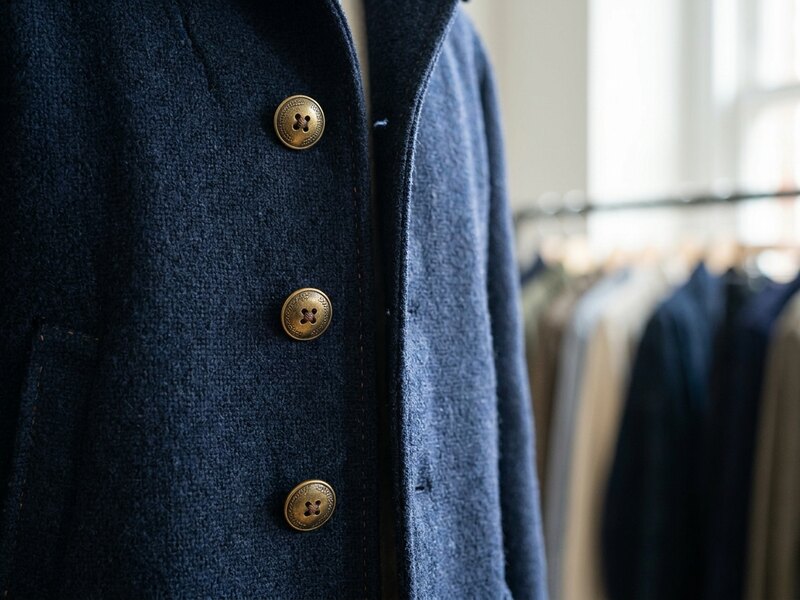
Coat buttons are simply buttons built for outerwear weight. The difference is not decorative. A 25mm button has roughly twice the face area of a shirt button, which spreads the pull across more fabric and stops the buttonhole from tearing at the corner. Most are also thicker through the body, and many use a shank back so the button sits slightly away from the cloth instead of being pressed flat into it.
The category covers more than one shape. A tailored overcoat usually takes a plain domed or flat button in a color close to the fabric. A peacoat or military-style coat takes a metal button with a raised pattern. A duffle uses a toggle through a loop rather than a buttonhole at all, which is a different system covered in our toggle buttons guide. Boucle and tweed jackets sit at the dressier end and often use a rimmed metal or enamel-look button. They belong to the same broad family as the rest of our decorative buttons, but a coat button is the one you will fasten and unfasten a hundred times a season.
What Are Coat Buttons Made Of?
Four materials cover nearly everything, and each one behaves differently once the coat lives outdoors.
Metal is the strongest and the most common on structured outerwear. Ours are cast alloy with a polished gold-tone, silver-tone, gunmetal or antique finish, which gives the hardware look that suits navy, black and dark twill. Metal is also the heaviest option, which is worth noting: a row of 30mm metal buttons on a soft knit will drag the front out of shape, so keep them for coats, blazers and canvas. If you want the same finishes in other shapes, our range of metal buttons covers them. Note that the finish is a plated tone, not solid precious metal.
Resin is the workhorse. It is molded, so size and hole placement are consistent across a pack, it is light enough for knitwear, and it takes almost any color or surface effect, from a flat matte to a horn-look streak or a pearl-look sheen. Horn-look and pearl-look surfaces are molded finishes in resin, not animal horn or pearl.
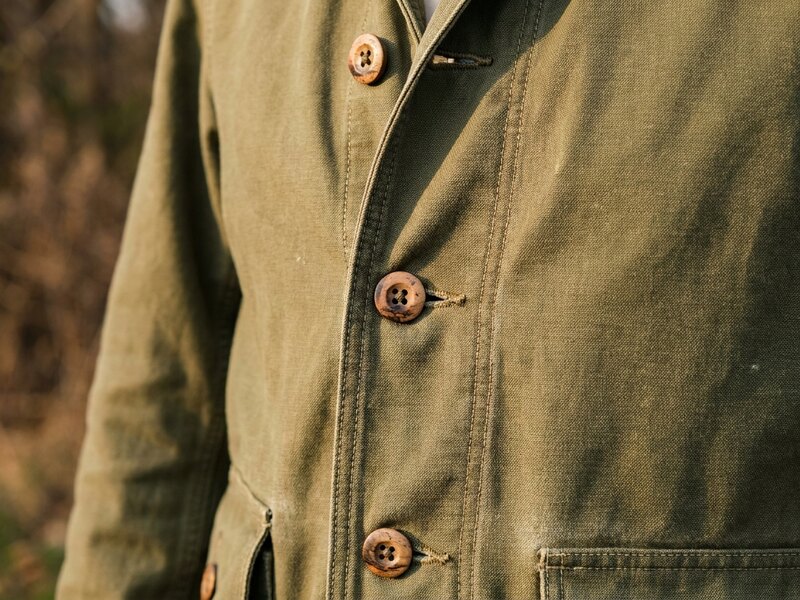
Natural wood suits casual and country-weight coats. It is warm in tone and very light, and because wood is a natural material the grain runs differently on every button, so a replacement will rarely match a twenty-year-old original exactly. Wood needs drying if it gets soaked and should be kept away from radiators, which split the grain.
Natural shell, or mother of pearl, is the dressy option, cut from real shell with a soft pearly sheen. It is the most expensive of the four and the most brittle, so it belongs on a lighter coat or a dress coat rather than anything that gets thrown in the back of a car.
Why Do Coat Buttons Matter?
Because the buttons are the only part of a coat you can change for a few dollars. The fabric, cut and lining are fixed the day you buy it; the closure is not. A camel overcoat with its original pale plastic buttons looks like what it cost. The same coat with dark horn-look resin or antique metal buttons reads as something considered, and nobody can tell you did it yourself in an evening.
There is a practical argument too. Most coats fail at the buttons long before the cloth gives out. A cracked front button, a lost cuff button, or a button sewn back on with thread too fine for the job is the usual reason a coat gets retired. Replacing the whole set rather than the one that broke keeps the front consistent and takes about the same amount of time.
How Do You Choose the Right Coat Buttons?
Size
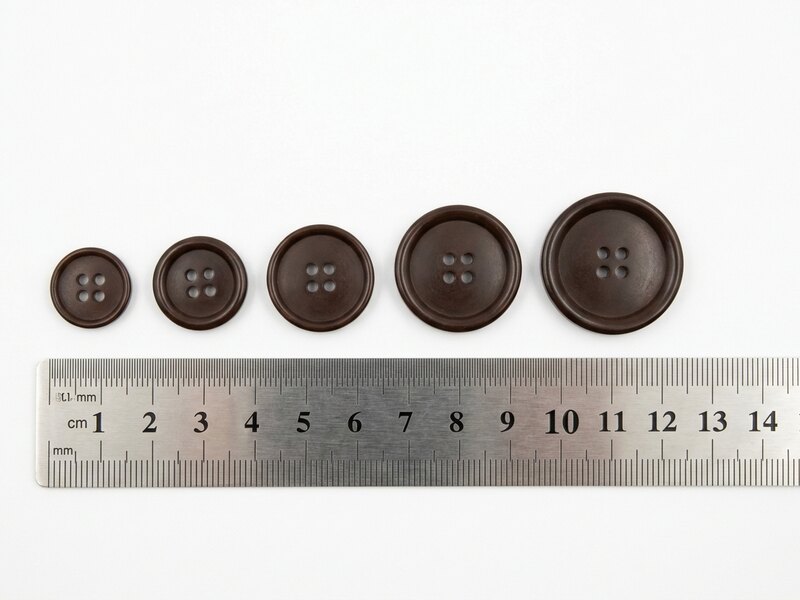
Measure the buttonhole, not the old button. A worn buttonhole stretches, so an old 23mm button can sit in a hole that now measures 26mm, and matching the button gives you a front that gapes. As a starting point, 20mm to 23mm suits a light coat or a blazer; 25mm to 28mm is the standard range for a wool overcoat and the safest single choice; 30mm and up belongs on a heavy coat where the closure is meant to be seen. Cuff and sleeve buttons are normally two to three sizes smaller than the front, usually 15mm to 18mm, and a coat front with cuffs the same size as the placket always looks slightly off. Our button size guide covers how to measure properly with a ruler rather than by eye.
Material
Match the material to the fabric weight and to how the coat gets used. Metal for twill, canvas, navy wool and anything structured. Resin for everyday wool coats and knitted outerwear, where weight matters. Natural wood for casual, rustic and country-weight cloth. Natural shell for a dress coat or a lighter spring coat. If the coat is going to be worn in wet weather every day, resin is the lowest-maintenance of the four.
Back and Attachment
This is the decision most people skip, and it matters more on a coat than anywhere else. A shank button has a loop on the back instead of holes, which lifts the face away from the cloth and leaves room for thick fabric to sit underneath, so it is the better choice on wool, boucle and anything padded. A sew-through button has two or four holes and sits flat, which suits a lighter coat, a trench or a flat placket, and it is faster to attach and easier to replace. Check what the coat has now before ordering: swapping a flat sew-through for a domed shank on a thick placket can leave the front slightly tight. If you want the full comparison, read shank vs sew-through.
Color
Decide first whether you want the buttons to disappear or to be the detail. To disappear, go one shade darker than the fabric rather than an exact match, because an exact match in a different material always looks slightly wrong in daylight. To make them the detail, the reliable pairings are antique gold-tone on navy, gunmetal on charcoal and black, dark brown on camel and oatmeal, and natural wood on olive and tan. Gold-tone on brown is the one combination that rarely works.
Quantity
Count before you order, and count everything. A single-breasted coat front usually takes four to six buttons, a double-breasted front eight to ten including the decorative row, and most coats add two to four on the cuffs plus one inside at the collar or as an anchor button. Then add two spares. Coat buttons sit at the outer edge of the garment and are the first thing to catch on a car door, and metal and wood tones both shift slightly between production batches, so buying the spare later rarely gives you a match.
How Do You Style Coat Buttons?
- Swap the factory buttons on a plain camel overcoat for dark horn-look resin, which is the single quickest upgrade and costs less than dry cleaning the coat
- Put antique gold-tone metal buttons on a navy peacoat for the traditional naval look, and keep the cuff buttons the same finish in a smaller size
- Use natural wood on an olive or tan field coat, where a metal button looks too formal against cotton canvas
- Keep natural shell for a dress coat or a lighter spring coat, where the pearly sheen reads as dressy rather than rugged
- Leave the front buttons alone and change only the cuffs if you want a small change, since cuff buttons are quick to reach and need no fitting check
- Keep the old buttons; a set of coat buttons is large enough to reuse in button craft projects as bag charms or drawstring pulls
Buying for a shop or brand? Coat buttons are also available for wholesale and bulk orders, with trade pricing for boutiques, makers and studios. Get in touch for a wholesale quote.
How Do You Replace the Buttons on a Coat?
- Before cutting anything off, measure each buttonhole and count every button on the coat, including cuffs and the inside anchor button. Order the front size, the cuff size and two spares in one go.
- Remove one button only and try the new one in that buttonhole first. If it passes through without forcing and sits flat when closed, carry on; if it is tight, stop and size down rather than stretching the hole.
- Cut the remaining buttons off from the back with small scissors, pulling the thread rather than slicing at the fabric, and mark each position with a pin or tailor’s chalk before the old stitching disappears.
- Thread a needle with heavy-duty or buttonhole thread, doubled and knotted. For a shank button, pass the needle through the loop and down again six to eight times, keeping a little slack so the button sits comfortably. For a sew-through, stitch across both pairs of holes six to eight times and keep a matchstick under the button so the thread shank has room.
- Finish by wrapping the thread a few times under the button to form a neat thread shank, knot on the back, and run the thread under the lining if the coat has one. Fasten the coat and check the front hangs straight before doing the cuffs.
How Do You Care for Coat Buttons?
Most coats are dry cleaned rather than washed, so the usual risk is not water but solvent and heat. Tell the cleaner if the buttons are natural shell or wood, and consider removing shell buttons before a heavy clean, since they are the most brittle of the four materials. Metal should be dried promptly if the coat gets caught in rain and kept away from nail polish remover and other solvents, which strip the finish. Resin wipes clean with a damp cloth and needs nothing else, but keep a hot iron off it, since resin softens under high heat. Wood should be dried with a cloth and never left against a radiator. Once a season, check the thread rather than the buttons: a button that is about to come off is always a thread problem first, and two minutes of restitching saves losing it.
Frequently Asked Questions
What size are coat buttons? Usually 20mm to 30mm on the front, with 15mm to 18mm on the cuffs. 25mm to 28mm is the standard range for a wool overcoat. Measure the buttonhole rather than the old button, because worn holes stretch.
What are coat buttons made of? Mainly metal alloy with a gold-tone, silver-tone or antique finish, molded resin, natural wood, or natural shell. Horn-look and pearl-look surfaces are molded resin finishes, not animal horn or pearl.
Should coat buttons be shank or sew-through? Shank for thick wool, boucle and padded plackets, because the loop lifts the button clear of the fabric. Sew-through for lighter coats, trenches and flat plackets. Check what the coat already has before ordering.
How many coat buttons do I need? Four to six for a single-breasted front, eight to ten for a double-breasted one, plus two to four cuff buttons, the inside anchor button, and two spares.
Can I put different buttons on a coat than it came with? Yes, as long as the new button passes through the existing buttonhole without forcing. Test one button in one hole before removing the rest.
Will every button in a pack match? Resin and metal are consistent within a pack. Natural wood and natural shell vary in grain and tone from piece to piece, which is part of the material rather than a defect, and tone can shift between production batches.
Can I order them in bulk? Yes. These buttons are available for wholesale and bulk orders with trade pricing, alongside smaller packs for home sewing.
Rule of Thumb
If you want one answer for a standard wool overcoat, take 26mm shank buttons in dark resin or antique metal for the front, 18mm of the same finish for the cuffs, and order two spares. Measure the buttonhole first, test one button before removing the rest, and sew with buttonhole thread rather than the spool you use for shirts.
Where to Buy
Browse our full button range for coat sizes in metal, resin, wood and natural shell, with both shank and sew-through backs, and see our metal buttons for the gold-tone, silver-tone and antique finishes that suit outerwear. Tell us the size, finish and quantity you need and we will help you match a full set, including cuff sizes and spares. Use the contact details at the bottom of this page and we will be happy to help.
Can You Buy Coat Buttons Wholesale?
Yes. As a button manufacturer, we offer coat buttons for wholesale and bulk orders, with trade pricing for boutiques, fashion brands, tailors and craft studios. Whether you are stocking a shop, fitting out a production run or filling craft kits, we ship factory-direct internationally. Tell us the materials, sizes, back types and quantities you need, using the contact details below, and we will reply with a wholesale quote and bulk availability.
Get in Touch
Have a question about coat buttons, or want a wholesale quote? Contact our customer service team and we will be happy to help.
- Email: [email protected]
- Phone: +86 158-8823-7906
- Address: No. 163, Hanbu Road, Qiaoxia Town, Yongjia County, Wenzhou City, Zhejiang Province, China, 325106
Recommended Reading
- Tweed Jacket Buttons: How to Choose and Replace Them
- The Complete Buying Guide to Vintage Heart Enamel Buttons with Gold Trim
- Cheongsam Buttons: A Guide to Traditional Chinese-Style Buttons