
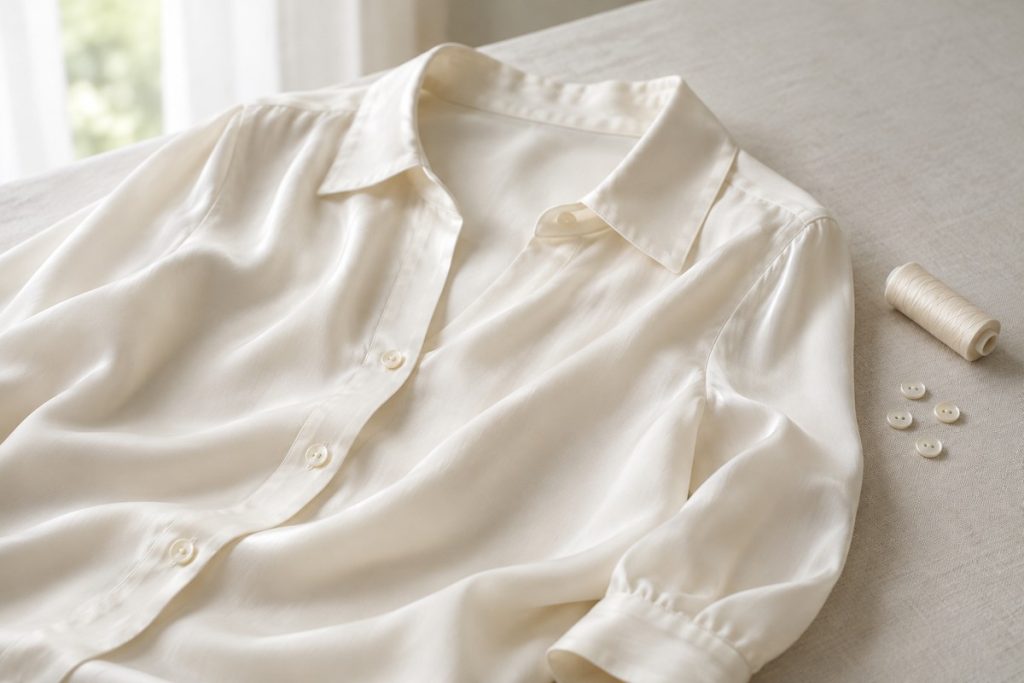
Quick answer: Choose buttons for silk blouses that feel smooth, suit the weight of the placket and pass through the buttonholes without forcing. Small shell or resin buttons can provide a quiet finish; a decorative button can work too, if the fabric supports it. Check the care requirements of both the blouse and the buttons before sewing on a full set.
A silk blouse can look quite different with a change of buttons. A pale, flat button tends to blend into the front; a small flower or pearl-look detail draws the eye. The choice gets more complicated when you pick the blouse up, though. A button that looks right on a table may pull at a soft placket or catch on a narrow buttonhole.
Before you choose a whole set, try one against the fabric. Check the edges, fasten it through the opening and see how the blouse hangs. Those few minutes are worth more than any size rule on its own.
What Makes a Button Suitable for a Silk Blouse?
Silk blouses vary. A sheer, fluid fabric needs a different approach from a blouse with a firmer, interfaced front. Look at the placket—the strip of fabric where the buttons attach—rather than judging the fabric by its label alone.
Three things are worth checking:
- Weight: Lay a button on the placket, then lift the garment. If the fabric dips under it, try a lighter option. A sample lightly basted in place gives a better sense of how it will hang.
- Smoothness: Run a finger around the edge and over the back. Inspect sewing holes or the loop too. Set aside any button with rough spots that could catch the fabric or thread.
- Care: The blouse and the button must both tolerate the intended cleaning method. A dry-clean-only blouse and a washable blouse may call for different choices.
A decorative button is not automatically wrong for silk. Just be more selective about its weight, edges and the way it moves through the opening.
Which Button Materials Work Well on Silk?
Natural Shell for a Soft Sheen
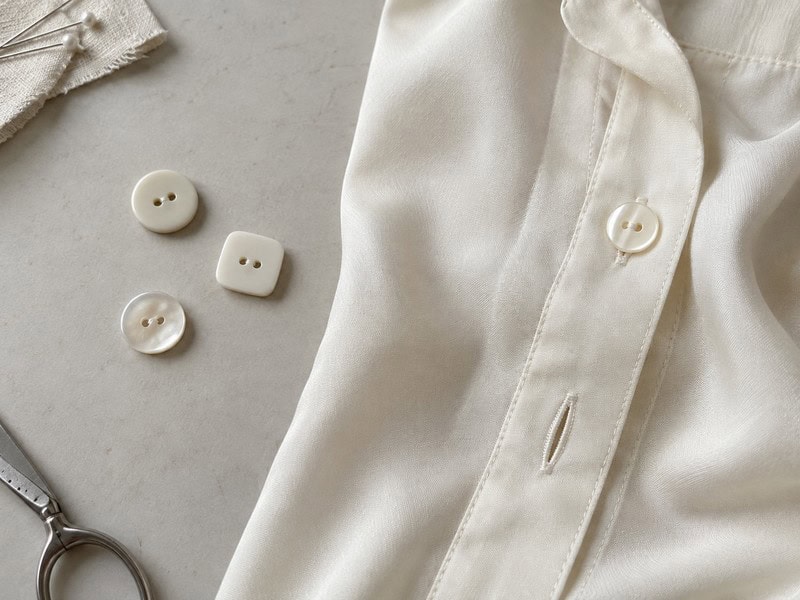
Shell is a useful starting point when you want the fabric to remain the focus. It has a subtle shimmer that changes with the light, and natural pieces can vary slightly in color and pattern.
Our natural shell buttons have a two-hole design and come in a range of sizes. Compare a smaller option with your blouse rather than choosing by appearance alone. Shell can chip, so inspect the edges and check the care guidance before use.
Resin for a Wider Choice of Colors
Resin can be made in many colors and finishes, from a quiet cream to black or a soft pastel. It is worth considering when you want a close color match or prefer a less traditional shape.
These square resin buttons are 11mm, with rounded corners, two sewing holes and a pearl-look sheen. They are resin, not shell or pearl. On an existing blouse, try the squared shape through the buttonhole before committing: a corner or a slightly domed face may change how easily it passes through.
Faux Pearl for a Decorative Detail
A pearl-look button can make a plain blouse feel more dressed up. It is also more noticeable than a flat disc, so place several along the front before deciding whether you like the effect repeated.
Our white flower pearl buttons have an 11mm scalloped face, a domed faux pearl and gold-tone detail. Their raised profile and flower-shaped edge deserve a careful fit check, especially on a narrow silk buttonhole. Check the back for smoothness and make sure the blouse can support the button; follow the product’s care instructions for the finish.
What Size Buttons Should You Choose for a Silk Blouse?
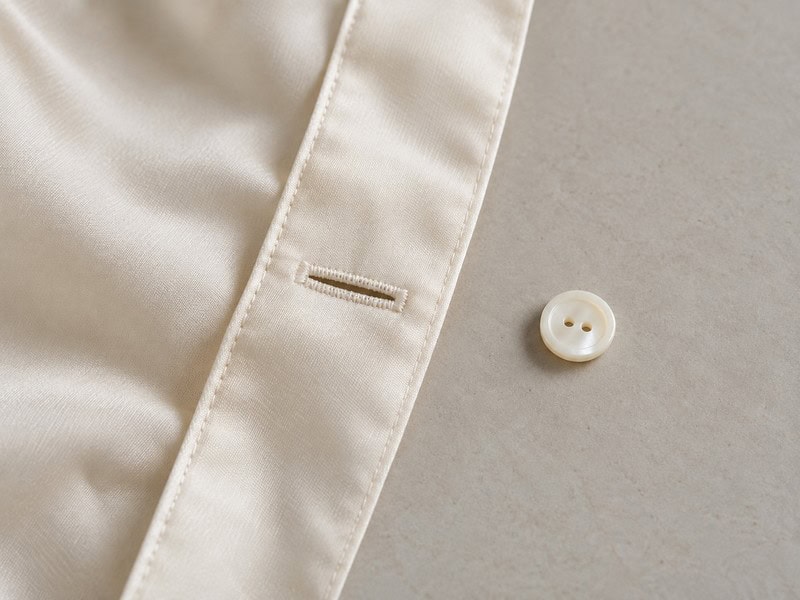
If you are replacing buttons, start with one that already fits. Measure across its widest point in millimeters and note its thickness as well as its shape. A new button with the same width can still feel tight if it is thicker, domed or square.
Small buttons around 10–12mm are a starting point for many fine blouses, not a promise that every 11mm button will fit. Follow the pattern for a new garment, or compare the replacement with the existing buttonhole. Our button size guide explains how to measure and compare sizes.
For an existing blouse, try this before sewing on the full set:
- Ease one button through the opening without pulling the fabric or forcing the corners.
- Let the buttonhole settle and gently move the closed placket as it would move during wear.
- Unfasten it and look for stretched stitches, caught threads or distortion.
- Repeat at the cuff if its buttonhole is a different size.
For a new blouse, make a test buttonhole using the same fabric layers and interfacing as the finished placket. If the fit is awkward, adjust the button or test opening before working on the garment.
Sew-Through or Shank: Which Is Better?
A sew-through button has holes on its face. It usually sits close to the placket, and the visible stitching can be matched to the fabric for a quieter look. Leave a little space under the button for the opposite layer of fabric; stitching it down too tightly can make the closure pucker.
A shank button has a loop on the back, leaving the face uninterrupted. It can be a lovely detail on a cuff or blouse front, but a tall or rough loop may not sit comfortably on very soft fabric. Check the back and try it in place rather than assuming every small decorative button will work.
How Do You Match Buttons to Silk?
Look at the buttons against the actual blouse in daylight. White silk can lean cool or warm, and a cream button that looks neutral on its own may stand out beside it.
- For a quiet finish: choose a color close to the blouse and keep the surface finish understated.
- For a little contrast: try pale buttons on a dark blouse, or a darker shade against cream silk.
- For a decorative accent: a flower or faux-pearl detail can work on cuffs or down the front. Lay out the whole row first so you can judge the effect at a distance.
If the blouse is printed, compare the buttons with both the background and the pattern. A close match to one color in the print often feels more settled than a new color introduced only by the buttons.
How Do You Sew a Button Onto Silk Without Damaging It?
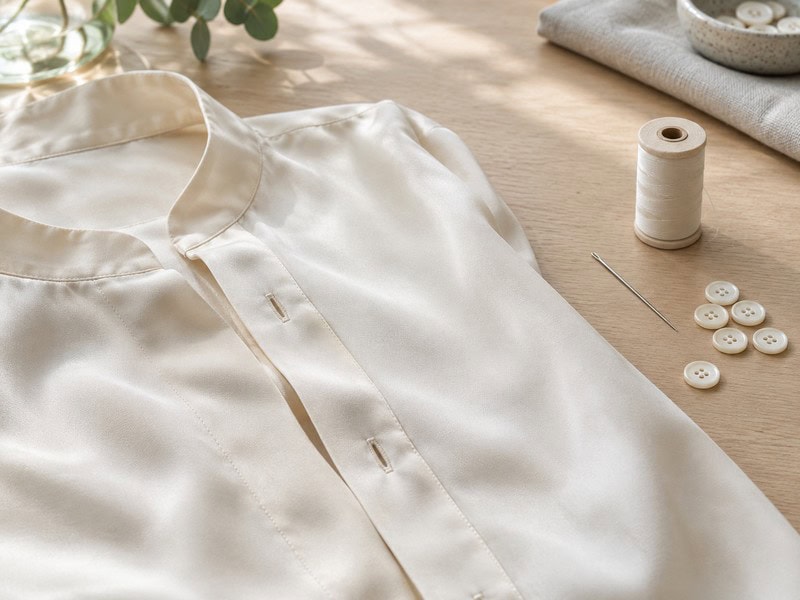
Use a fine, sharp hand-sewing needle and suitable matching thread. Test both on a fabric scrap if you have one; on a finished blouse, work through the existing reinforced area and needle holes where practical. Old holes can remain visible on delicate silk, so avoid repeatedly unpicking and repositioning.
- Close the placket in its natural position and mark the button location without stretching the fabric.
- Check the intended attachment area. If the silk is very fragile or unsupported, ask a tailor about suitable reinforcement before sewing.
- Stitch through the button holes or loop and the intended placket layers, keeping the fabric flat and the tension gentle.
- For a sew-through button, leave enough clearance for the buttonhole layer; a fine temporary spacer can help. Secure the stitches beneath the button if a short thread shank is needed.
- Fasten the blouse and check for puckering. If the fabric pulls into a dimple, adjust the stitching rather than tightening it further.
Our step-by-step button-sewing guide covers both sew-through and shank styles. If the blouse is especially delicate or valuable, a professional alteration is a sensible option.
How Should You Care for a Silk Blouse With Buttons?
Start with the garment’s care label, then check the button instructions. Do not assume that all silk can be washed at home or that all decorative finishes can go through the same cleaning process.
If the blouse requires dry cleaning, tell the cleaner about delicate or decorative buttons and ask whether they need protection or removal. For washable garments, use only a method suitable for both the fabric and the specific buttons. Avoid bleach and direct heat on decorative finishes; press around the buttons according to the garment’s instructions.
Frequently Asked Questions
Are shell buttons suitable for silk blouses?
They can be, if their size and weight suit the blouse and their edges are smooth. Natural shell can chip, so inspect each button and check its care instructions.
Can I use decorative buttons on delicate silk?
Yes, provided the placket supports them and they pass through the buttonholes without catching. Try one first, particularly if it has a raised face, a shaped edge or a metal back.
Do the buttons need to match the blouse exactly?
No. A close match keeps the closure quiet; a contrast makes it part of the design. Compare samples in daylight and look at a full row before deciding.
How many buttons should I order?
Count the front, cuffs and any collar closures separately. Add a spare or two where practical, and check the pack quantity before ordering.
Where Can You Find Buttons for Silk Blouses?
For a subtle, natural sheen, compare our shell buttons with the blouse in daylight. If you want a different shape or color, look at the 11mm square resin buttons. For a dressier detail, consider the white flower pearl buttons, keeping their raised shape and care needs in mind.
Choose a sample that suits the fabric, test the fit and count the closures before ordering. The right button is the one that looks good and lets the blouse sit and fasten comfortably.
Recommended Reading
- The Complete Button Size Guide: How to Measure and Choose Buttons
- How to Sew On a Button: A Step-by-Step Guide