
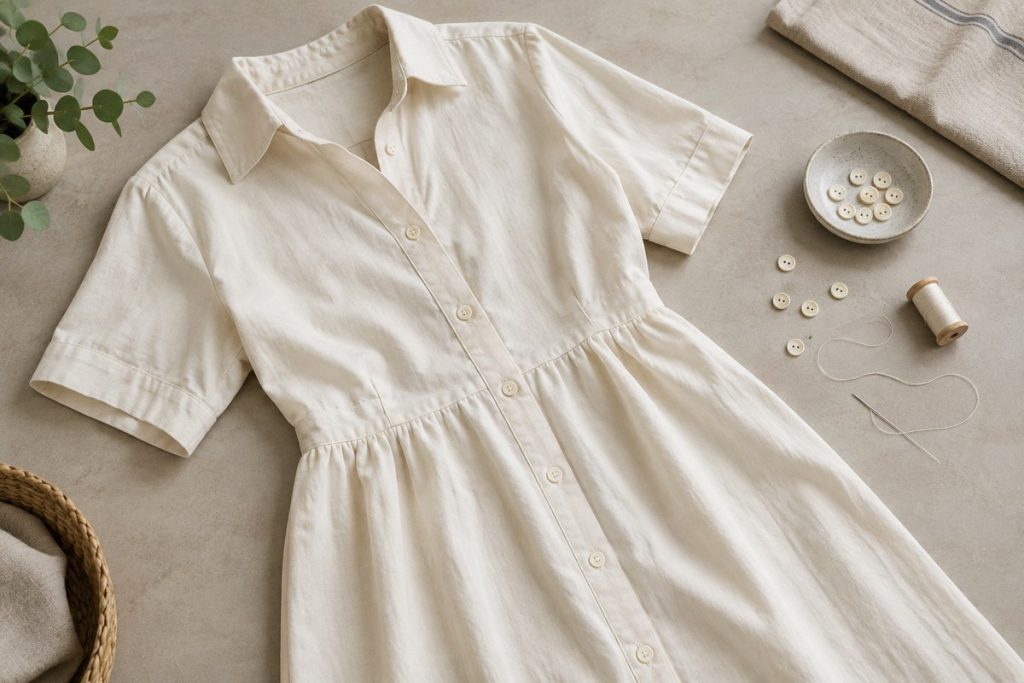
Quick answer: Choose buttons for dresses by checking the fabric, the buttonholes and how the dress closes. A light placket needs buttons it can support; an existing buttonhole needs a replacement that passes through comfortably. Once the fit works, choose a color and shape that suit the dress—and check that the buttons can be cared for with the garment.
Buttons can change the character of a dress without changing its shape. A row of pale discs might disappear into a cream shirt dress; the same front finished with small flowers becomes a feature. But the nicest-looking choice is not always the easiest one to wear. A heavy button can pull on a soft placket, while a pretty edge may catch as it passes through an existing buttonhole.
Whether you are sewing a dress or replacing a missing set, start with one sample. See how it looks against the fabric, how it fastens and how the front sits when you move.
How Do You Choose Buttons for a Dress?
A button-down shirt dress, a fitted bodice and a dress with decorative buttons can place different demands on a closure. Before shopping, look at four things:
- Fabric and support: A fine, fluid dress needs a button the front can carry without dipping. A structured, interfaced placket can usually support a more substantial choice.
- Function: Is the button holding the garment closed or simply decorative? A working closure needs a comfortable fit and secure attachment; a decorative detail still needs a sound place to sew it.
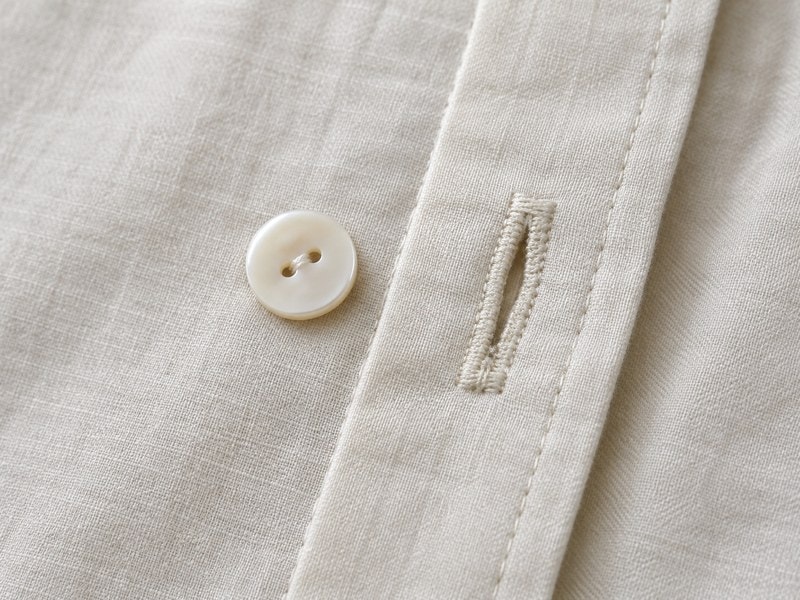
- Existing openings: Measure an original button and test a replacement through the actual buttonhole. Width is only part of the fit: thickness and shape matter too.
- Care: Check the dress label and the button’s instructions together. A decorative finish may need different handling from the fabric.
If a dress pulls open between buttons because it is too tight, a different style of button alone may not fix the fit. Consider an alteration before changing the closure.
What Button Styles Work on Different Dresses?
Shirt Dresses and Everyday Styles
On a shirt dress, a long row of buttons is both practical and visible. Flat, sew-through buttons are a simple choice when you want the fabric or print to take the lead. Lay several along the placket rather than judging a single button in isolation; a small contrast becomes more noticeable when repeated from neckline to hem.
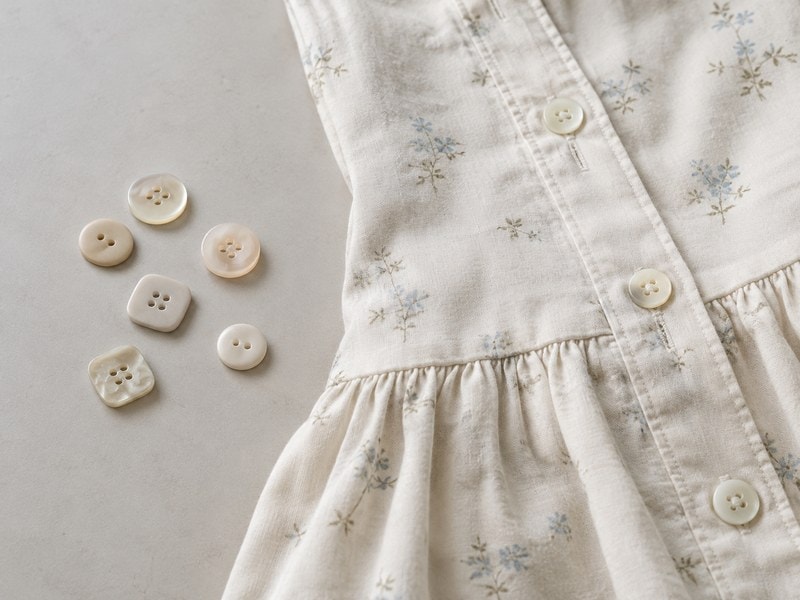
Our natural shell buttons offer a soft sheen for a quieter finish. Natural shell varies from piece to piece and can chip, so inspect the edges and check the care instructions. For another subtle option, these square resin buttons have a pearl-look finish and measure 11mm. Their shape can be a nice detail, but try a sample through an existing opening before choosing the full set.
Floral and Decorative Dresses
A flower-shaped button can echo a floral print or give a plain dress a small accent. Our cherry blossom buttons have white petals and a gold-tone center and are approximately 15mm across. Place a few along the front to see whether the repeated design feels right for your dress.
For a bolder detail, colorful flower buttons have a pearlescent resin face and gold-tone rim. At 21mm, they will be more prominent than a small shirt button. They may suit a dress with a wider, supportive placket, but test the weight, shape and fit rather than assuming the size will work.
Fitted or Occasion Dresses
On a fitted bodice, a closure may be under more strain when you sit or move. Choose a button that stays fastened without forcing it through the opening, and check the fit of the garment itself. A raised or decorative style can suit an occasion dress, but consider whether it catches on a belt, bag strap or delicate fabric.
If the buttons are purely decorative and the dress closes with a zipper or another fastener, you have more freedom with shape. Even then, check that the material beneath each button is strong enough to support it.
What Size Buttons Should You Use for a Dress?
There is no single size for every dress. A delicate bodice, a casual shirt dress and a heavier garment can all use different sizes. For a replacement, measure an original button across its widest point in millimeters and compare its thickness and profile with the new one. Our button size guide explains measurements and ligne sizes.
A button with the same width as the original may still fit differently if it is thicker, domed, square or flower-shaped. Before sewing a complete row:
- Gently pass one sample through the existing buttonhole without pulling the stitches.
- Close the placket and move the dress as it would move when worn. The button should stay in place without distorting the opening.
- Unfasten it and check for catching, stretching or puckering.
- Check cuffs or other closures separately; they may use different sizes.
For a new dress, follow the pattern’s recommendation as a starting point. Make a test buttonhole in the same fabric layers and interfacing as the finished placket, then adjust the sample or opening before working on the garment.
Sew-Through or Shank Buttons for Dresses?
A sew-through button has holes on its face and usually sits close to the fabric. Matching thread can keep the stitching discreet; contrasting thread can make it part of the design. Leave enough room beneath the button for the buttonhole layer instead of pulling the button tightly against the dress.
A shank button has a loop on the back and an uninterrupted face. The space under it can accommodate fabric, but the height of the loop and the button’s profile affect how the closure sits. Inspect the back and edges for rough spots, especially on fine fabric. Neither construction is automatically better: choose the one that fits the dress, the opening and the intended look.
How Do You Match Buttons to a Dress?
Take the dress or a fabric sample into daylight and compare a few options:
- For a quiet look: Choose a tone close to the fabric. A pale button on a cream dress may blend in, though warm and cool whites can look quite different side by side.
- For contrast: Try a darker button on a light dress or a pale one on a dark dress. Arrange the whole row to judge how much contrast you want.
- For a print: Pick up one color from the pattern, or match the background so the buttons do not compete with it.
- For an accent: Use flower or pearl-look details where you want the eye to land. Check that raised or shaped edges pass through any working buttonholes.
If you are changing only one missing button, a close match in size, thickness and finish may be less noticeable than a perfect color match that sits differently. If a match is impossible, replacing the full row can make the change look intentional.
How Do You Sew Buttons Onto a Dress?
Use a needle and thread suitable for the fabric. On an existing dress, check whether the placket is reinforced and reuse the original attachment position where practical. Fine or fragile fabric may need a tailor’s assessment before you add reinforcement.
- Close the dress naturally and mark the position opposite the center of each buttonhole, without stretching the fabric.
- Sew through the button holes or shank and the appropriate placket layers, keeping the stitches secure but the fabric flat.
- For a sew-through button, leave enough clearance for the buttonhole layer. A temporary spacer can help; wrap and secure a short thread shank beneath the button if needed.
- Fasten the dress, check for puckering and test the closure gently. Adjust the stitching if it pulls the fabric.
Our step-by-step button-sewing guide covers the basic techniques. For a valuable dress or a damaged placket, an experienced alterations professional can help.
How Should You Care for a Dress With Decorative Buttons?
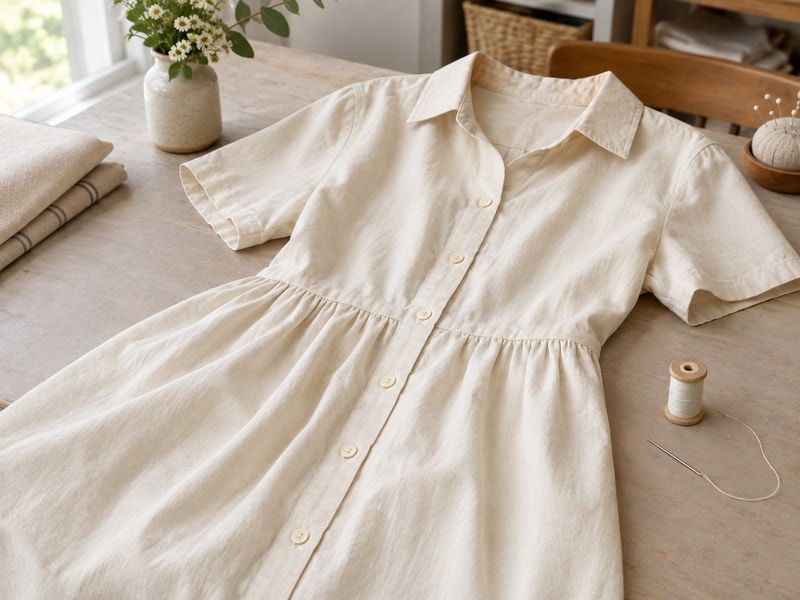
Follow the garment’s care label and check the instructions for the specific buttons. Avoid assuming that a washable dress and a decorative button can withstand the same treatment. If the dress needs dry claeaning, tell the cleaner about delicate finishes and ask whether the buttons need protection or removal. Press around buttons according to the garment’s instructions, and keep direct heat away from finishes that could be damaged.
Frequently Asked Questions
Can I replace dress buttons with a different shape?
Yes, but check each working buttonhole first. Corners, petals and raised faces can change how a button passes through even when its widest measurement matches the original.
Are shell buttons suitable for a dress?
They can be, if their size and weight suit the fabric and their care requirements match the dress. Check for chips or rough edges and try a sample before buying a full set.
Can decorative buttons be used as working closures?
Some can. Check the attachment, the buttonhole fit and whether the placket supports the button. A decorative-only button should not be relied on to close the dress.
How many buttons should I order?
Count the front, cuffs and any other fastenings separately. Check the pack quantity and consider adding one or two spares for later repairs.
Where Can You Find Buttons for Dresses?
For a subtle finish, compare our shell buttons with your dress. For a floral accent, look at the cherry blossom buttons or the larger colorful flower buttons. The right choice is the one that fits the opening, suits the fabric and feels comfortable to wear.
Recommended Reading
- The Complete Button Size Guide: How to Measure and Choose Buttons
- How to Sew On a Button: A Step-by-Step Guide