
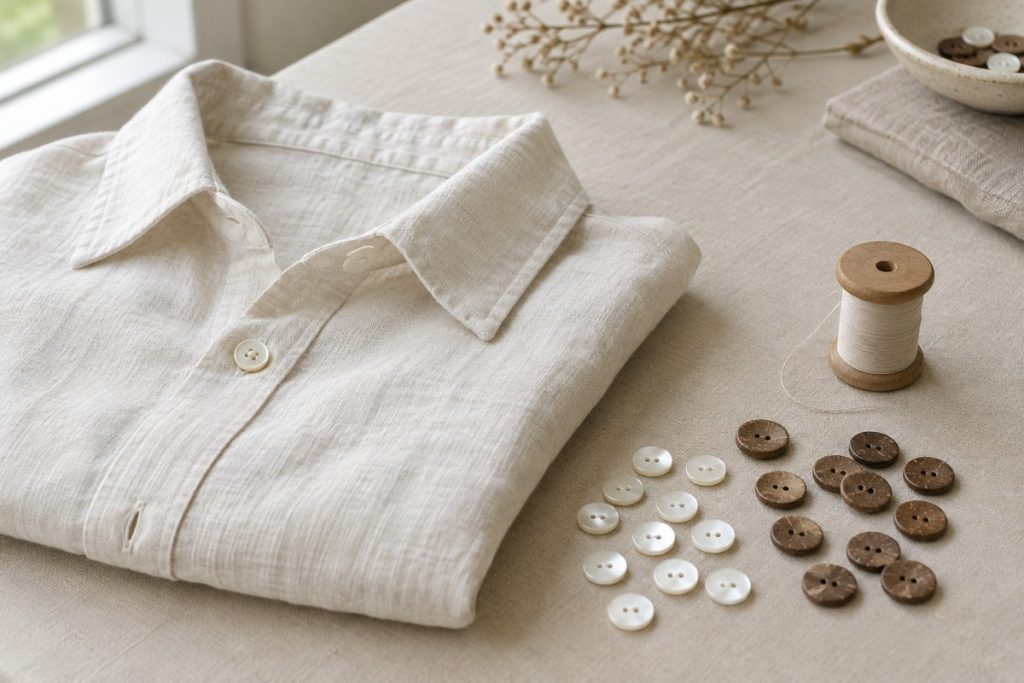
Quick answer: Choose buttons for linen clothing that suit the weight of the fabric and fit the buttonholes comfortably. Shell has a soft sheen, wood and coconut shell bring warmer tones, and resin comes in a wide range of colors. Check the care instructions before committing to a full set.
A row of pale shell buttons can almost disappear against an ivory linen shirt. Change them for brown coconut buttons and the same shirt takes on a more casual look.
But looks are only part of the decision. The button that works on a sturdy linen overshirt may be too heavy for a fine blouse. And if you’re replacing an old set, a button with the right diameter can still be too thick for the existing holes. It’s worth checking both before you start sewing.
At a Glance
- Fabric weight: Start with a button that the placket can support without pulling or sagging.
- Size: Measure a button that already fits, then test the replacement in the buttonhole.
- Material: Compare the look and care requirements of shell, wood, coconut shell and resin.
- Attachment: Flat sew-through buttons work well for many shirts; shank styles can add a decorative detail.
- Care: Check the instructions for both the garment and the particular buttons.
- Quantity: Count every button, including cuffs and collar details, and consider keeping a spare.
What Makes a Button Suitable for Linen?
Start with the part of the garment that actually holds the buttons. Even a light linen shirt may have a reinforced placket—the strip of fabric along the front—while an unlined jacket can have a surprisingly soft edge.
Lay a sample where it will be attached, then lift the garment. Does the edge hang straight, or does the button pull it down? If the sample looks promising, baste it in place and try the garment on. A row of buttons can behave differently from a single one laid on a table.
For a garment you haven’t made yet, prepare a scrap with the same layers and interfacing as the finished placket. Use it to test the button and buttonhole together.
Which Button Materials Work Well With Linen?
Shell, wood, coconut shell and resin can all work on linen. The differences become clearer when you put them against the fabric—and consider how you plan to wash the garment.
| Material | Appearance on linen | What to consider |
|---|---|---|
| Shell | A soft, natural sheen against matte fabric | Can chip; check the care instructions and avoid rough handling. |
| Wood | Warm grain and a relaxed, textured look | Finishes vary, so check whether the button suits your washing routine. |
| Coconut shell | Brown tones that create contrast on pale linen | Natural color and grain can vary between buttons. |
| Resin | A wide range of colors and finishes | Check the thickness, edges and care instructions for the particular style. |
Shell Buttons for a Subtle Finish
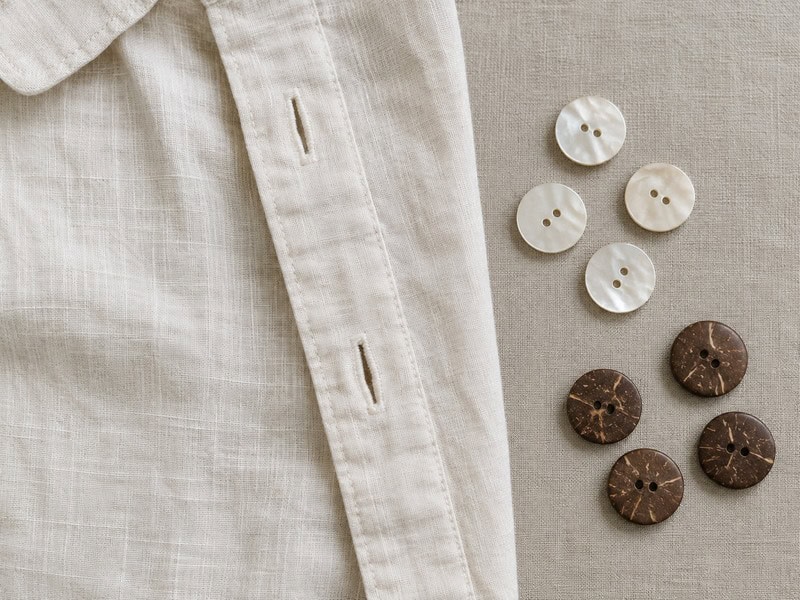
Shell catches the light without necessarily drawing attention away from the fabric. A pale shell button can look especially quiet on white or cream linen; on navy or charcoal, the same button becomes a more visible detail.
For example, these natural white shell buttons have a soft mother-of-pearl sheen and a sew-through design. Put one against your fabric in daylight: a button that looks white on its own may appear cooler beside warm ivory linen. Natural shell also varies slightly from piece to piece.
Shell can chip if knocked against a hard surface. Check the product’s care guidance, and protect the buttons during washing and storage.
Wood and Coconut Shell for a Warmer Look
Wood and coconut shell can bring a little contrast to plain linen. They are worth considering for a relaxed shirt, a handmade dress or an overshirt where the button is meant to be noticed.
On an oatmeal linen shirt, natural coconut buttons make a warm brown line down the front. Their color and grain vary, so lay out the set before sewing and arrange the lighter and darker pieces as you like.
If you want a little more detail, these flower-shaped wooden buttons have a scalloped outline. Try one through the buttonhole first: the shaped edge may not pass through as easily as a plain round button of the same width.
Wood and coconut finishes are not all alike. Follow the button’s care instructions rather than assuming every style can be soaked or machine washed.
Resin for Color and Everyday Sewing
Resin gives you more room to play with color. A muted button can blend into a linen blouse; a brighter one makes a simple shirt feel less plain.
These 11mm colorful resin buttons come in different colors and shapes, including square and triangle styles. They’re an option to compare with a small shirt buttonhole, though the shape and thickness matter as much as the stated size. If you have an existing opening, try a sample before ordering the full set.
What Size Buttons Should You Choose for Linen Clothing?
For an existing garment, the most useful starting point is a button that already fastens comfortably.
Measure straight across its widest point in millimeters. Then note the thickness and shape. A domed or square button can be harder to pass through the same opening than a thin, round button, even when both have a similar width.
For a new garment, follow the pattern’s suggested size first. Make a test buttonhole on a scrap of the same fabric, with the same interfacing and number of layers, before cutting into the finished placket.
Try this simple fit check:
- Push the button through without forcing or twisting the fabric.
- Let the buttonhole settle around it.
- Move the closed placket gently as it would move during wear.
- Unfasten the button and look for stretching, pulling or caught threads.
If it slips out too easily, try another size or profile. If the button distorts the opening, do not force it. Our button size guide explains how to measure diameter and compare sizes.
Should You Choose Sew-Through or Shank Buttons?
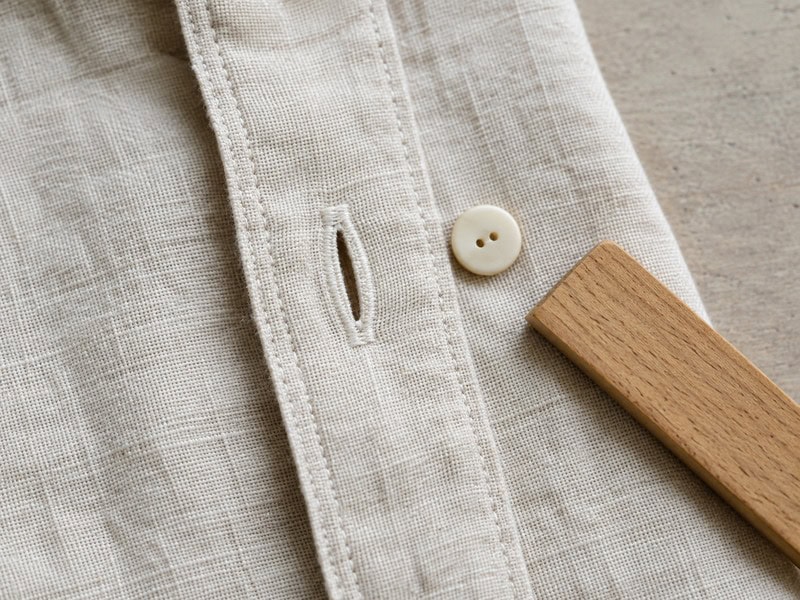
Sew-through buttons are a practical starting point for many linen shirts and dresses. Their two or four holes sit on the face, so the attachment stitches remain visible. Matching thread keeps the look understated; contrasting thread can become a small design detail.
A shank button has a loop on the back and no sewing holes across its face. It can suit a decorative closure or a thicker placket, but check that the loop is smooth and that the button does not tip noticeably on lightweight fabric.
Whichever back you choose, leave enough room for the buttonhole layer beneath the button. A sew-through button pulled tight against the placket can make the fabric pucker and the garment difficult to fasten.
How Do You Match Button Colors to Linen?
Put the buttons on the actual garment if you can. Linen has undertones that aren’t always obvious in a product photo: an ivory button may blend into one cream fabric and stand out against another.
- White or ivory linen: Pale shell creates a subtle finish; brown coconut shell gives a warmer contrast.
- Natural, oatmeal or beige linen: Wood tones can sit comfortably alongside the fabric, while darker buttons make the placket more noticeable.
- Navy or charcoal linen: Light shell or cream resin creates contrast. A dark button gives a quieter line.
- Colored linen: Compare buttons in daylight and decide whether you want a close match or a deliberate accent.
Move the samples along the placket and look at the garment from a short distance. A button that looks just right on its own may feel too busy when repeated down the entire front.
How Do You Sew Buttons Onto Linen Without Puckering?
Use a thread suited to the garment, mark the positions carefully and avoid pulling the stitches too tight.
- Lay the garment flat. Close the placket in its natural position without stretching the fabric.
- Mark each position. Use the existing buttonholes as a guide, or follow your pattern if the garment is new.
- Check the layers. Sew through the intended placket layers; if the fabric is loose or fragile, consider suitable reinforcement before attaching the button.
- Attach the button. Make several secure passes through the holes or shank, keeping the fabric flat.
- Leave clearance. For a sew-through button, a small temporary spacer can help leave room for the opposite placket. Wrap the thread beneath the button to form a short thread shank if needed.
- Fasten and test. Close the garment and check that the fabric sits smoothly. Adjust the attachment if it pulls into a dimple.
For a closer look at the stitches, see our step-by-step guide to sewing on a button.
How Should You Wash Linen With Buttons Attached?
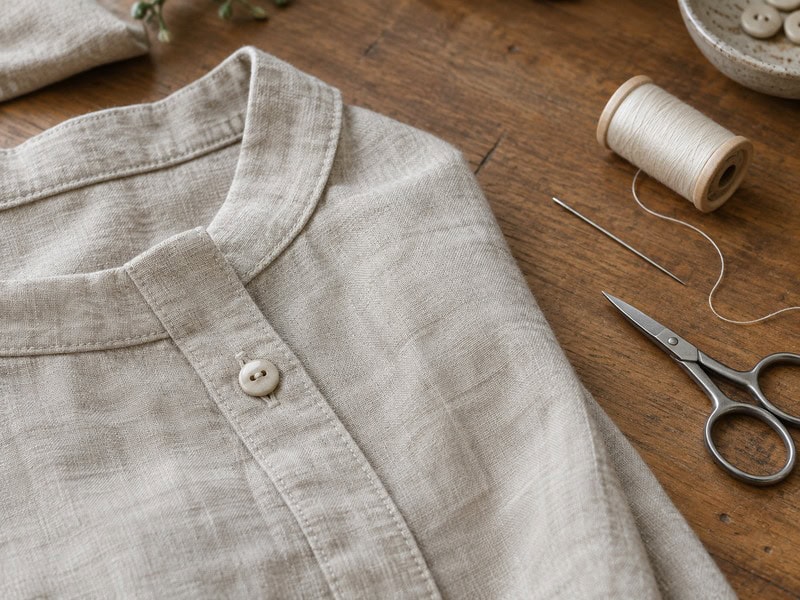
Check the garment label and the button manufacturer’s instructions before choosing a wash method. The fabric and the buttons both need to tolerate it.
Protect delicate buttons from knocks and abrasion. Avoid prolonged soaking, bleach or direct heat on a button unless its instructions say the treatment is suitable. When pressing linen, work around the buttons rather than pressing the iron directly onto them.
If a button cannot tolerate the garment’s usual care routine, choose a different style or plan to remove it before cleaning. A spare button kept with the garment can make a future repair much easier.
Frequently Asked Questions
Are wooden buttons suitable for linen shirts?
They can be, provided the size and weight suit the shirt and the finish is compatible with its care routine. Test the button against the placket and buttonhole before sewing on a full set.
Can I use shell buttons on a linen dress?
Yes. Shell can add a subtle sheen to a linen dress. Choose a size that fits the buttonholes and check the care instructions, since shell can chip under rough handling.
Should linen buttons match the fabric?
They do not have to. A close match keeps the focus on the fabric, while a contrasting button makes the closure more visible. Lay out a full row before deciding.
Can I replace a round button with a square one?
Sometimes. Measure the replacement and test it through the existing buttonhole. Its corners and thickness may affect the fit even when its stated width is similar.
How many buttons should I order?
Count every closure on the garment, including cuffs, pockets and collar details. Add a spare or two if the pack size allows, particularly for natural materials that can vary in appearance.
Where Can You Find Buttons for Linen Clothing?
If you prefer a quiet finish, start with our natural white shell buttons. For a warmer contrast, take a look at the natural coconut buttons. You can also compare the colors and shapes in our 11mm resin button selection.
Before ordering, check the existing buttonholes and the care label. If you’re making a garment from scratch, a sample and a test buttonhole can save you from sewing on an entire set that doesn’t quite work.
Ordering for a Clothing Brand or Sewing Studio?
Shancco welcomes bulk inquiries from clothing brands, boutiques and sewing studios. Send the style, size, quantity and intended use through our wholesale inquiry page, and ask about availability and order terms.