
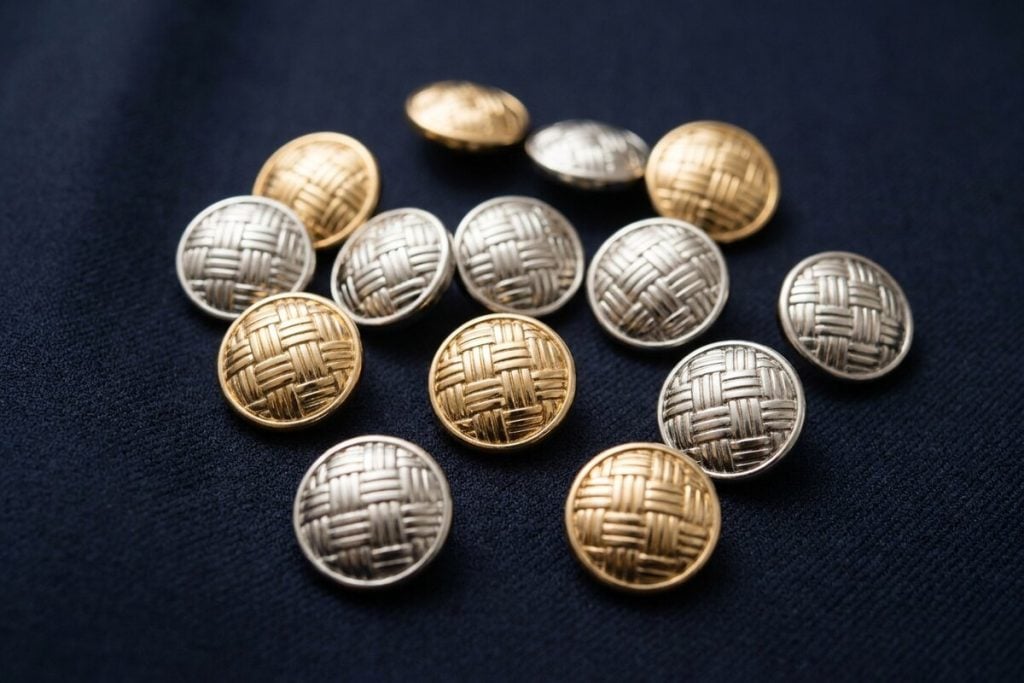
Quick answer: Blazer buttons are the metal or horn-look buttons on a tailored jacket, and they come as a set rather than singly, usually two or three on the front at 20mm to 25mm, plus two to four smaller ones on each cuff at 15mm to 17mm. Most have a shank back. Swapping the set is the fastest way to take a plain jacket somewhere else, and ours come in a woven metal texture in gold-tone and silver-tone, in four sizes from 17mm to 25mm.A blazer is the one jacket in a wardrobe where the buttons are supposed to be noticed. That is the whole convention: a navy blazer with metal buttons reads differently from the same jacket with flat black discs, and the fabric has not changed at all. The catch is that a blazer needs a matched set across two different sizes, and nobody tells you that the first time you try to replace one. Below is how to count what you need, how to pick the size pairing, and the two mistakes that turn a ten-minute job into a wrecked jacket. If you are still deciding on the material, our guide to the types of buttons lays the options out side by side.
At a Glance
Our woven metal blazer buttons, for reference through the rest of this guide:
- Design: Domed face with a woven, embossed basketweave texture
- Material: Alloy with metal plating
- Back: Shank (loop) back, not sew-through
- Color: Two tones, bright gold-tone and bright silver-tone
- Size: Four sizes, 17mm, 20mm, 23mm and 25mm
- Pack: 6 or 15 buttons per pack, one color and size
- Good for: Blazers, suit jackets, sport coats, cardigans, knitwear and DIY tailoring
What Are Blazer Buttons?
Blazer buttons are the buttons used on a tailored jacket, and the thing that separates them from ordinary buttons is that they work as a set across two sizes. The front of the jacket takes the larger ones. Each cuff takes a run of smaller ones, usually overlapping slightly, which tailors call kissing buttons. Both sizes share one finish, and that shared finish is what makes a jacket look deliberate rather than repaired.
The metal version comes from a long naval and club tradition, which is why you still see gold-tone buttons on a navy jacket more than any other combination. You do not need a crest or an anchor on the face to get the effect. A plain domed or textured metal button does the same job and goes with far more. Suit jackets, as opposed to blazers, usually take horn-look or resin buttons in a shade close to the cloth, because a suit is meant to read as one piece of fabric.
What Are Blazer Buttons Made Of?
Three materials cover nearly everything.
Metal and alloy is the traditional choice and the one people mean when they say blazer buttons. Ours are alloy with a plated gold-tone or silver-tone finish, a surface finish rather than precious metal, which keeps them light enough that a row of them does not drag on a jacket front. Texture matters more than you would expect at this size: a flat polished face shows every fingerprint and scuff, while our woven basketweave surface breaks up the light and hides wear.
Horn and horn-look is the quiet option, standard on suit jackets and tweed sport coats. Brown, mottled, matte. It disappears into the cloth on purpose.
Resin covers everything in between and is the easy way to match an unusual color, a sage jacket or a rust one, where no metal tone sits right. For the full material comparison, our metal buttons guide goes deeper on finishes.
Why Replace the Buttons on a Blazer?
Because it is the only alteration that changes the character of a tailored jacket without touching the tailoring. The cut stays, the fit stays, the cost is an evening and the price of a pack.
It is also the usual fix for an inherited or secondhand jacket. The fabric and the cut on an older blazer are frequently better than anything at the same price now, and what dates it is the hardware, worn plating, a yellowed plastic face, or three surviving buttons and one obvious stranger. Replace all of them at once and the jacket comes back. Replacing only the missing one almost never works, because a plated finish ages, and a new button next to a ten-year-old one announces itself.
How Do You Choose the Right Blazer Buttons?
Size: the Front and Cuff Pairing
A blazer needs two sizes, not one. The front buttons sit between 20mm and 25mm on most jackets, and the cuff buttons run roughly two thirds of that, typically 15mm to 17mm. Our four sizes pair up cleanly: 23mm or 25mm on the front with 17mm on the cuffs for a standard blazer, or 20mm with 17mm on a slimmer, shorter jacket.
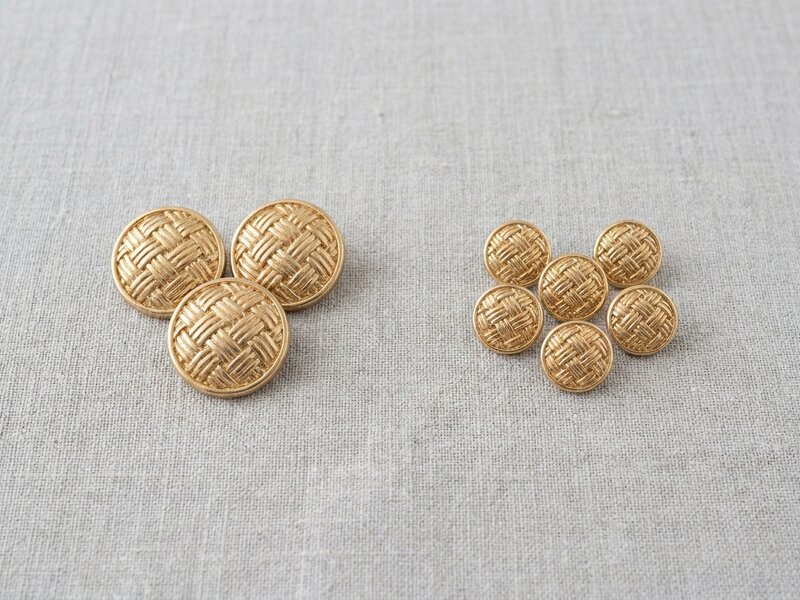
Measure the buttonhole, not the old button. Ready-made jackets are finished with buttonholes cut for the original size and no larger, so a 25mm button will not pass through a hole cut for 20mm. Cuff buttonholes are often decorative and stitched closed, which means cuff size is yours to choose freely — but check, because a jacket with working cuff buttonholes limits you to roughly the original size. Our button size guide covers how to measure both properly.
Finish and Color
Gold-tone is the classic, and it is warm: navy, camel, cream, bottle green, black. Silver-tone is cooler and more current, and it sits better on gray, charcoal, white and pastels. One rule saves a lot of second-guessing. Match the buttons to the other hardware you will wear with the jacket, the belt buckle and the watch, rather than to the fabric.
Contrast is the point on a blazer, so do not be shy with it. The combination that always works is a mid-tone metal on a dark solid cloth. The combination to avoid is bright metal on a busy pattern, where the buttons and the weave fight each other.
Back and Attachment
Metal blazer buttons are nearly always shank buttons. The loop sits under the fabric, so no thread crosses the face and nothing interrupts the finish, and the shank gives the button the small lift it needs to sit over a lapel edge or a thick cuff without pulling.
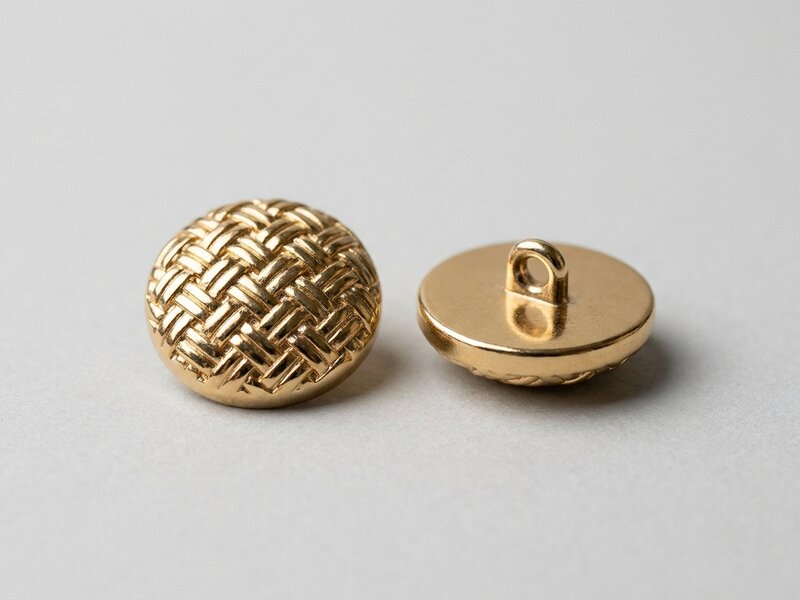
Sew-through is more common on horn-look suit buttons, where visible thread is part of the look. If you are weighing the two, shank vs sew-through sets them against each other.
How Many You Need
Count before you order, because this is where people come up short. A single-breasted two-button blazer with three buttons on each cuff needs 2 large and 6 small, eight buttons in two sizes. A three-button front with four on each cuff needs 3 large and 8 small. A double-breasted jacket runs six on the front, of which two are usually decorative, plus the cuffs. Add one spare in each size while you are at it.
Our packs hold 6 or 15 buttons of one size and color, so a typical blazer takes one small pack of the front size and one of the cuff size, with spares left over. Keep them with the jacket, not in a tin with everything else.
How Do You Style Blazer Buttons?
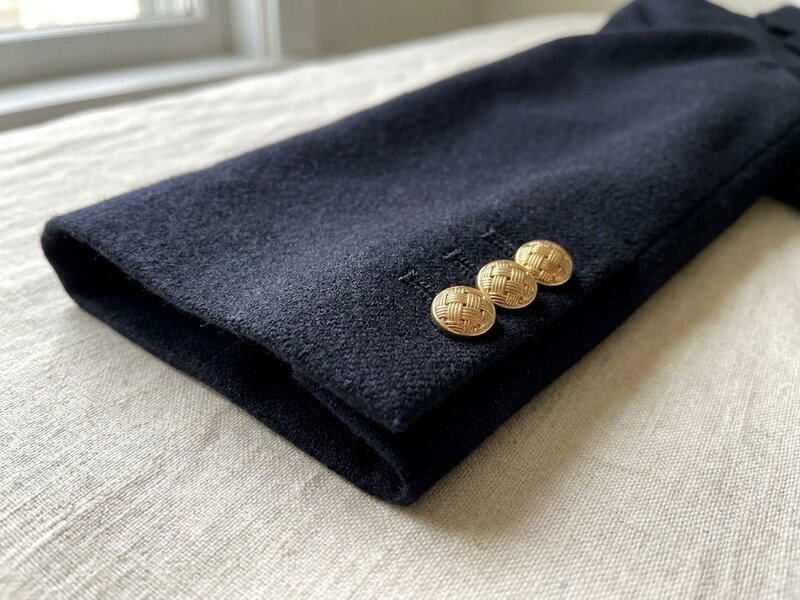
- Gold-tone on a navy jacket is the combination the whole category is built on, and it still works.
- Keep front and cuff buttons in the same finish and texture. Mismatched metals on one jacket read as a repair.
- On a jacket you want to dress down, go silver-tone and skip the pocket flaps — it moves the jacket away from formal.
- Use leftover cuff-size buttons on a waistcoat, a knitted cardigan or a bag flap to tie an outfit together, and our button craft projects has more ideas for the spares.
- Leave the bottom front button undone. Always. The jacket is cut to hang that way, and buttoning it pulls the hem out of line.
Buying for a shop or brand? These blazer buttons are also available for wholesale and bulk orders, with trade pricing for tailors, boutiques and studios. Get in touch for a wholesale quote.
How Do You Sew On a Shank Button?
- Mark the position and thread a needle, doubling the thread and knotting the end.
- Bring the needle up from the back of the fabric to the front at the mark.
- Pass the needle through the shank loop, then back down close to where it came up.
- Repeat four or five times, keeping just enough slack that the thread shank matches the thickness of the cloth underneath.
- Wrap the thread a few times under the button to form a neat thread shank, then knot on the back.
Two things specific to a tailored jacket. Work through the front layer and the canvas only, not through the lining, or the jacket will pucker. And unpick the old buttons rather than cutting them off. A slipped blade on jacket cloth is a repair you cannot hide.
How Do You Care for Blazer Buttons?
Plated metal is a surface, and dry cleaning solvent is hard on it. Ask the cleaner to protect the buttons, or unpick and replace the front set if a jacket goes in often. Wipe the faces with a soft dry cloth now and then to lift the dullness that builds up, and keep bleach, solvents and abrasive cleaners away from them. Do not store a jacket pressed tightly against a garment bag zipper, since metal rubbing on metal is what wears plating through at the edges. Check the stitching on the front buttons each season, since they loosen long before they drop off.
Frequently Asked Questions
What size are blazer buttons? Front buttons are usually 20mm to 25mm and cuff buttons 15mm to 17mm. Ours come in 17mm, 20mm, 23mm and 25mm, so you can pair a front and a cuff size from one range.
How many buttons does a blazer need? Count the front and both cuffs. A two-button jacket with three buttons on each cuff needs 2 large and 6 small; a three-button front with four per cuff needs 3 large and 8 small.
Are blazer buttons shank or sew-through? Metal ones are nearly always shank, so no thread crosses the face. Horn-look suit buttons are more often sew-through.
Are gold blazer buttons real gold? No. They are a gold-tone plated finish over an alloy base, which keeps them light and affordable.
Can I put bigger buttons on an existing jacket? Only if the buttonholes allow it. Measure the front buttonhole first. Cuff buttonholes are often stitched closed and purely decorative, which leaves the cuff size open to you.
What is the difference between blazer buttons and suit buttons? Blazer buttons are usually metal and meant to be seen. Suit buttons are usually horn-look or resin in a shade close to the cloth, so the jacket reads as one piece.
Can I order them in bulk? Yes. These buttons are available for wholesale and bulk orders with trade pricing, alongside smaller packs for home sewing.
Rule of Thumb
One decision made for you: 23mm on the front, 17mm on the cuffs, woven metal with a shank back, gold-tone on a dark jacket and silver-tone on a light or gray one. Measure the front buttonhole before you order, count both cuffs, and replace the whole set at once rather than matching a single lost button.
Where to Buy
Browse our blazer buttons in bright gold-tone and silver-tone, in four sizes from 17mm to 25mm, in packs of 6 or 15. For a mini 10mm button for cuffs and lighter jackets, see our pedestal metal shank buttons; for a flat, low-profile alternative, see our minimalist solid metal buttons; and for an enamel-centered option made for jackets, see our chain edge buttons. If you are not sure which pairing suits your jacket, get in touch using the contact details at the bottom of this page and we will be happy to help.
Can You Buy Blazer Buttons Wholesale?
Yes. As a button manufacturer, we offer these blazer buttons for wholesale and bulk orders, with trade pricing for tailors, boutiques, fashion brands and craft studios. Whether you are stocking a shop, fitting out a production run or filling repair kits, we ship factory-direct internationally. Tell us the sizes, finishes and quantities you need, using the contact details below, and we will reply with a wholesale quote and bulk availability.
Get in Touch
Have a question about our blazer buttons, or want a wholesale quote? Contact our customer service team and we will be happy to help.
- Email: [email protected]
- Phone: +86 158-8823-7906
- Address: No. 163, Hanbu Road, Qiaoxia Town, Yongjia County, Wenzhou City, Zhejiang Province, China, 325106
Recommended Reading
- The Complete Guide to Buttons: Types, Materials and How to Choose
- The Complete Button Size Guide: How to Measure and Choose Buttons
- Sew-Through vs. Shank Buttons: Which One Should You Use?
- Metal Buttons: Types, Finishes and How to Choose