
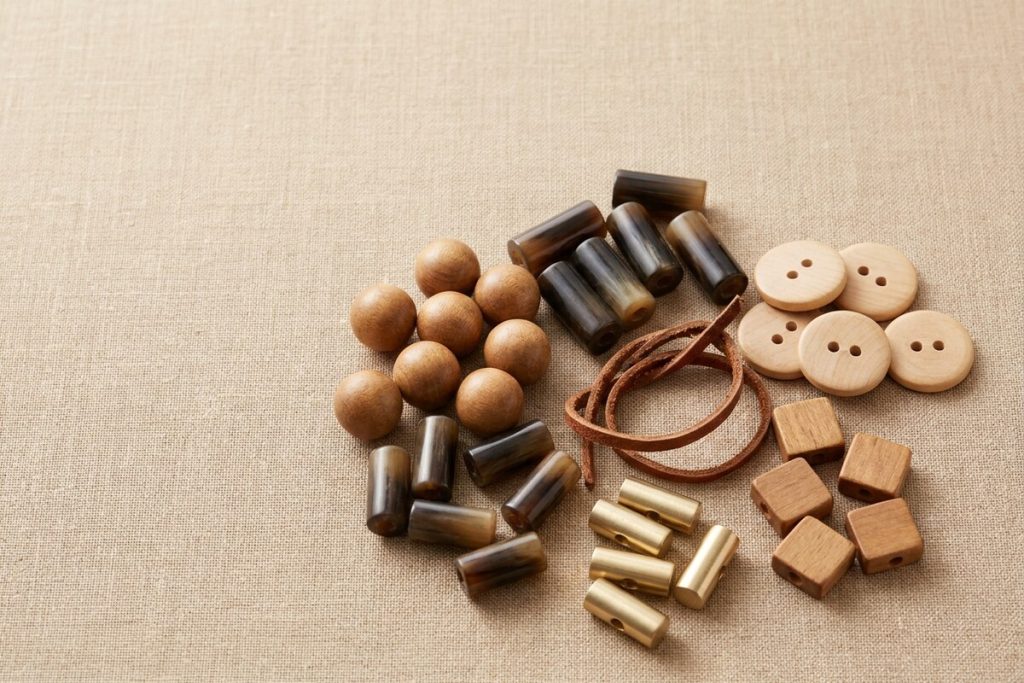
Quick answer: Toggle buttons are long barrel-shaped fasteners, usually wood, horn-look resin or metal, that close through a loop of cord or leather rather than a buttonhole. They run from about 35mm to 70mm long, suit heavy coats, duffles and chunky knitwear, and are the one closure you can work with cold hands and gloves on.
Every winter the same question comes in from customers replacing the fastenings on an old duffle coat: do I need the toggle, the loop, or both. It is a fair question, because a toggle is the only common button that does not use a buttonhole, and that one difference changes how you size it, how you attach it and what it costs to replace. Below is what toggles are made of, how long yours should be, how the loop system works, and the measurement to take before you order anything. If you are still comparing closures in general, our guide to the types of buttons sets them side by side.
At a Glance
- Design: Elongated barrel, olive or spindle shape, drilled through with two holes or fitted with a metal eye
- Material: Natural wood, horn-look resin, or metal with a brushed or antique finish
- Back: No shank and no buttonhole; it fastens through a cord, rope or leather loop
- Color: Natural wood browns, dark horn-look tones, black, and gold-tone or gunmetal metals
- Size: Typically 35mm to 70mm long, measured end to end rather than across
- Pack: Usually 4 to 6 per coat front, so buy the pack with spares
- Good for: Duffle coats, parkas, capes, chunky cardigans, bags, hoods and craft closures
What Are Toggle Buttons?
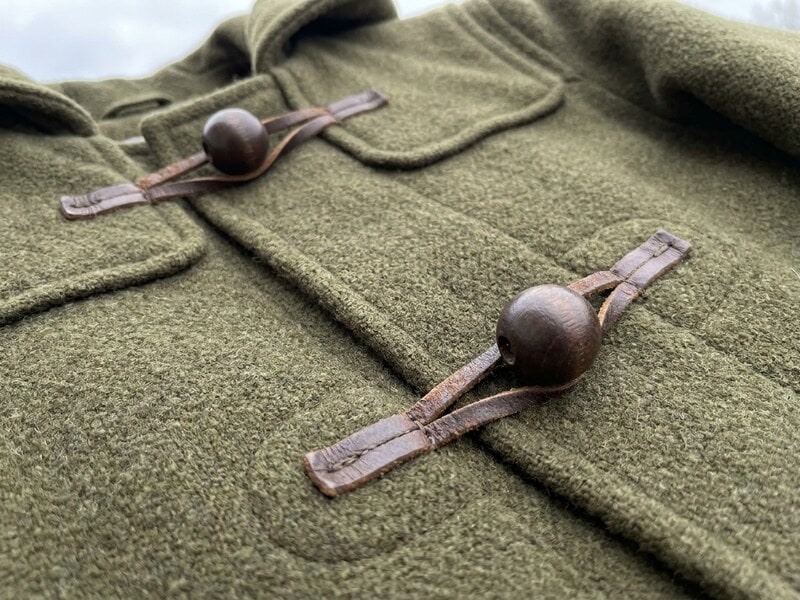
Toggle buttons are fasteners shaped like a short bar rather than a disc. Instead of passing flat through a slit, the bar is pushed sideways through a loop and then turns back across it, so the tension of the loop is what holds it shut. That is why a toggle stays closed on a coat that a conventional button would strain open, and why it works through gloves.
The design comes out of duffle coats, which took it from workwear and naval kit, and it has never really left outerwear since. On a modern garment you will see two setups. The traditional one pairs a toggle on one side with a rope or leather loop sewn to the other, sometimes with both the toggle and the loop mounted on leather tabs. The simpler one uses a short cord with a toggle at each end, which is what most knitwear and bag closures use. Toggles sit in the same broad family as the rest of our decorative buttons, but they are the only member of it you can fasten without looking.
What Are Toggle Buttons Made Of?
Three materials cover almost everything on the market, and the choice is more practical than decorative.
Natural wood is the classic. It is light, warm in tone and forgiving if the coat knocks against a door frame, and because it is a natural material the grain differs on every piece. That variation is the look, not a fault, but it does mean a replacement toggle will rarely match a twenty-year-old original exactly. Horn-look resin is the one most people mistake for the real thing. It is molded, so the length and drill holes are consistent across a pack, it shrugs off rain better than wood, and it gives you the deep streaked brown of horn without the price. It is resin with a horn-look finish, not animal horn. Metal toggles, usually gold-tone, silver-tone or gunmetal over a cast body, are the heaviest of the three and the right pick when the garment is dark and you want the closure to read as hardware. If you want that metal look elsewhere on the garment, our range of metal buttons covers the same finishes in standard shapes.
One point on weight, since it rarely gets mentioned. A 60mm metal toggle on a soft wool cardigan will drag the front out of shape within a season. Keep metal for coats and canvas, and use wood or resin on anything knitted.
Why Are Toggle Buttons Worth It?
They solve a problem other buttons do not. On a heavy coat, a conventional buttonhole takes the strain in one direction and eventually frays at the corner; a loop spreads it and simply stretches instead. Toggles also let you repair a coat without touching the buttonholes, which matters on a garment where the holes are bound and hard to redo.
The other argument is cost against effect. A set of four toggles plus loops is one of the cheapest changes you can make to a tired coat, and because toggles are large they change the character of the whole garment, not just the placket. Swap dark horn-look toggles onto a camel coat and it reads as outerwear with intent rather than something inherited.
How Do You Choose the Right Toggle Buttons?
Material
Match the material to the fabric weight. Wood or horn-look resin for wool, boucle and knitwear. Metal for canvas, waxed cotton and heavy twill. If the coat is going to live outdoors in wet weather, resin is the lowest-maintenance of the three, since wood needs drying out and raw metal can mark a pale fabric where it rests.
Size
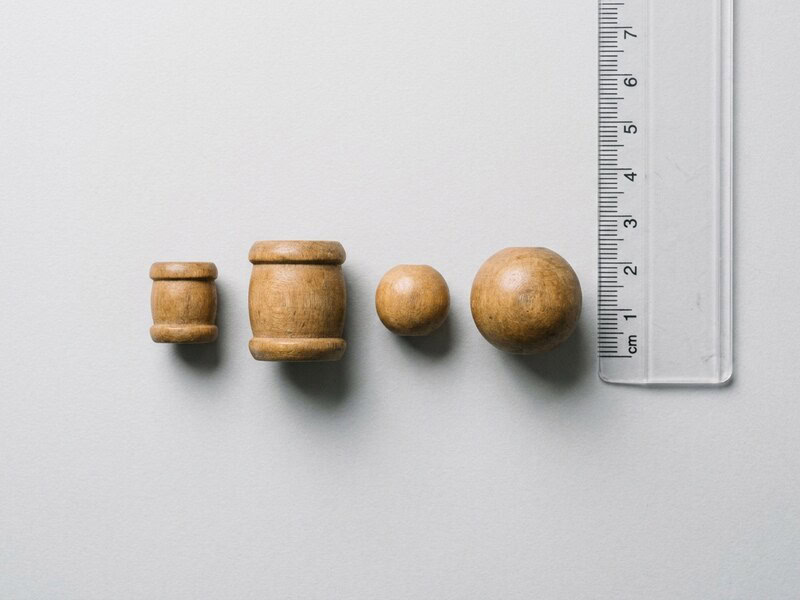
Measure the loop, not the old toggle. The toggle needs to pass through the loop at an angle and then sit across it, so the usable rule is that the toggle should be at least a third longer than the loop is wide when flat. As a starting point, 35mm to 45mm suits cardigans, children’s coats and bags; 50mm to 60mm is the standard duffle coat range and the safest single choice; 65mm to 70mm belongs on a heavy wool coat or a cape where the closure is meant to be a feature. Our button size guide covers how to measure properly, and the same principle applies here even though toggles are measured along their length rather than across.
Loops and Attachment
Decide early whether you need loops too, because most toggles are sold without them. You have three options. Rope or cord loops are traditional and easiest to replace at home. Leather tab loops look the most finished and are the strongest, but you need a leather needle. Fabric loops cut from the garment’s own cloth disappear into the coat, which is useful on a cape. If you are replacing only the toggles and keeping existing loops, measure those loops first, since a stretched old loop will need a longer toggle than the original. Toggles have no shank and no sew-through face in the usual sense, so if you are weighing closure types for a different project, shank vs sew-through is the comparison to read.
Color
Keep it simple. Natural wood sits best on camel, oatmeal, olive and navy. Dark horn-look tones carry gray, black, burgundy and anything checked, and they are the most forgiving when the coat has several colors in it. Gold-tone metal lifts navy and black but fights with brown. Whatever you choose, match the loop color to the garment rather than to the toggle; a contrasting loop draws the eye to the stitching, which is the part you least want noticed.
Quantity
Most coat fronts use four to six toggles, and a hood adds one more. Buy at least two spares. Toggles sit at the outer edge of a garment and are the first thing to catch on a car door or a bike handlebar, so breakage is far more common than with flat buttons, and wood tone in particular shifts between production batches.
How Do You Style Toggle Buttons?
- Replace the toggles and loops on a plain wool coat with dark horn-look resin for the quickest route to a duffle-coat silhouette without buying one
- Keep the toggles natural wood and switch the loops to black leather tabs, which looks far more considered than matching both
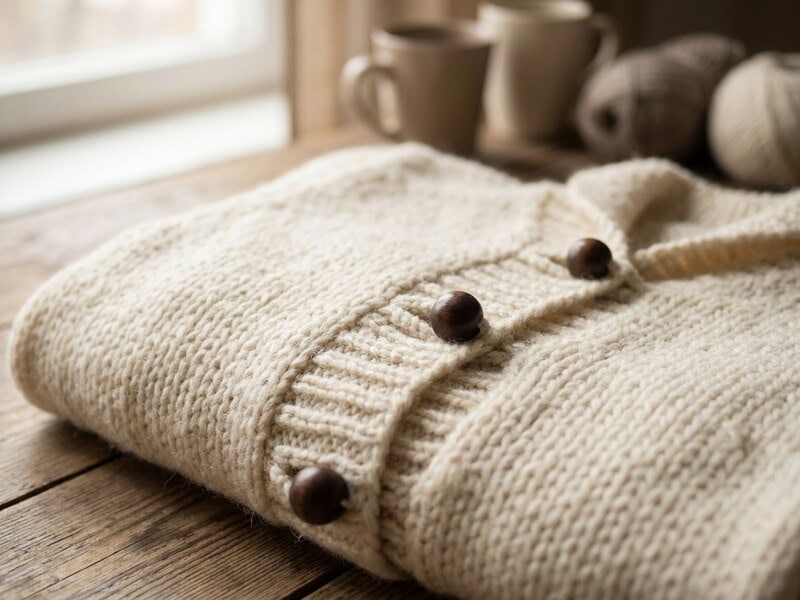
- Use 35mm toggles on a chunky hand-knitted cardigan with crochet loops, where a buttonhole in thick yarn never stays neat
- Put a single toggle at the neck of a cape or poncho and leave the rest of the front open, so the closure becomes the only detail
- Use a cord with a toggle at each end to draw in a hood or a bag top, which needs no sewing into the garment face at all
- Keep the spares for button craft projects; a wood toggle makes a better bag charm or drawstring pull than any flat button
Buying for a shop or brand? Toggle buttons are also available for wholesale and bulk orders, with trade pricing for boutiques, makers and studios. Get in touch for a wholesale quote.
How Do You Attach a Toggle Button?
- Lay the coat flat, fasten it as it should sit when closed, and mark where each toggle and each loop will go. Pin them before you stitch anything, then try the coat on.
- Thread a needle with heavy-duty or buttonhole thread, doubled and knotted. Ordinary sewing thread will not survive a winter on a toggle.
- For a two-hole toggle, stitch through the holes into the fabric eight to ten times, keeping the toggle lying along the line of the placket rather than across it.
- For a toggle on a leather or fabric tab, stitch the tab to the coat with a small rectangle of stitching and a cross through the middle, which spreads the load across the whole tab.
- Sew the loop on the opposite side last, after checking the closed position again, and reinforce its base with extra stitches. Leave the loop a touch snug; cord and leather both give within a few weeks of wear.
How Do You Care for Toggle Buttons?
Remove toggles before washing where you can, since they take more punishment in a drum than flat buttons do. Wood should be dried with a cloth if it gets soaked and kept away from radiators, which split the grain. Horn-look resin needs nothing beyond a wipe. Metal should be dried promptly and kept away from solvents and nail polish remover, both of which strip the finish. Check the loops twice a season rather than the toggles, because loops are almost always what fails first, and replacing a frayed cord loop early saves the toggle from being lost altogether.
Frequently Asked Questions
What are toggle buttons made of? Most are natural wood, horn-look resin or metal with a brushed or antique finish. Horn-look resin is molded resin, not animal horn.
Do toggle buttons need buttonholes? No. They fasten through a cord, rope, leather or fabric loop, which is why they suit heavy coats where buttonholes wear out.
What size toggle do I need? Measure the loop, not the old toggle. 35mm to 45mm for cardigans, bags and kidswear, 50mm to 60mm for a standard duffle coat, and 65mm to 70mm for heavy coats and capes.
How many do I need for a coat? Four to six for the front, plus one for a hood, and two spares. Toggles catch on things and break more often than flat buttons.
Do toggles come with the loops? Usually not. Loops are normally bought or made separately, so check before you order if you are replacing a full set.
Will every toggle in a pack match? Resin and metal will be consistent. Natural wood varies in grain and tone from piece to piece, which is part of the material rather than a defect.
Can I order them in bulk? Yes. These buttons are available for wholesale and bulk orders with trade pricing, alongside smaller packs for home sewing.
Rule of Thumb
If you are replacing a duffle coat closure and want one answer, take 55mm horn-look resin toggles with leather tab loops, in a quantity that leaves you two spares. That combination fits more adult coats than anything else, survives rain, and stays matched if you need to replace one next year. For knitwear, drop to 35mm in natural wood instead.
Where to Buy
Browse our full button range to see the wood, resin and metal finishes we make, and get in touch if you want toggle shapes in a specific length or material. We produce to order for coat and outerwear closures as well as standard button shapes. Use the contact details at the bottom of this page and we will be happy to help.
Can You Buy Toggle Buttons Wholesale?
Yes. As a button manufacturer, we offer toggle buttons for wholesale and bulk orders, with trade pricing for boutiques, fashion brands, tailors and craft studios. Whether you are stocking a shop, fitting out a production run or filling craft kits, we ship factory-direct internationally. Tell us the materials, lengths and quantities you need, using the contact details below, and we will reply with a wholesale quote and bulk availability.
Get in Touch
Have a question about toggle buttons, or want a wholesale quote? Contact our customer service team and we will be happy to help.
- Email: [email protected]
- Phone: +86 158-8823-7906
- Address: No. 163, Hanbu Road, Qiaoxia Town, Yongjia County, Wenzhou City, Zhejiang Province, China, 325106
Recommended Reading
- Tweed Jacket Buttons: How to Choose and Replace Them
- The Complete Buying Guide to Vintage Heart Enamel Buttons with Gold Trim
- Cheongsam Buttons: A Guide to Traditional Chinese-Style Buttons