
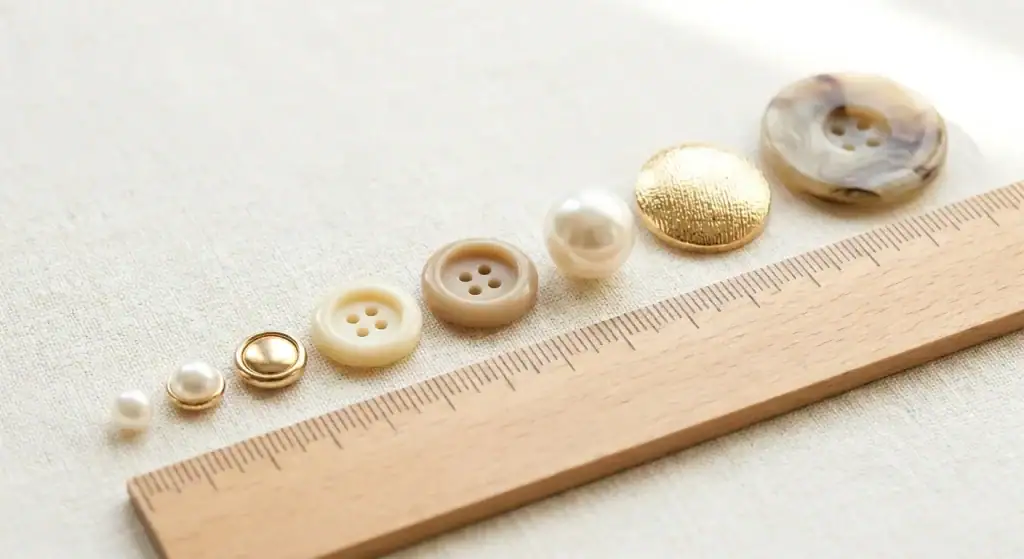
Quick answer: Most everyday buttons fall between 10mm and 25mm. As a quick rule, use 10 to 12mm for shirts and baby clothes, 15 to 18mm for blouses and cardigans, 18 to 23mm for dresses and jackets, and 23mm or larger for coats and outerwear. To find your size, measure the button’s diameter in millimeters, or match it to a button you already own. The full chart below covers every common garment.
Getting the button size right is one of those small details that makes a handmade or refreshed garment look properly finished. A button that is too big pulls at the fabric and gapes; one that is too small slips through the hole and feels lost on the placket. The good news is that button sizing is simple once you know how it works. This guide explains how buttons are measured, how to measure one yourself, and exactly what size to choose for every kind of project.
How Are Buttons Measured?
Buttons are measured by their diameter, which is the distance straight across the widest part of the face. Most shops, including ours, list this in millimeters (mm), so a button described as 20mm is 20mm across.
You may also see the old tailoring unit called the ligne (written L or the ° symbol). One ligne is about 0.635mm, and 40L equals one inch (25.4mm). It is worth recognizing, because some patterns and vintage buttons still use it. Here is a quick conversion for the sizes you will meet most often:
| Ligne (L) | Millimeters | Roughly |
|---|---|---|
| 16L | ~10mm | shirt buttons |
| 20L | ~12.5mm | blouses, kids’ clothes |
| 24L | ~15mm | light cardigans |
| 28L | ~18mm | cardigans, dresses |
| 32L | ~20mm | jackets |
| 36L | ~23mm | blazers, coats |
| 40L | ~25.4mm (1 inch) | coats, heavy knits |
| 45L+ | ~28mm and up | statement outerwear |
How Do I Measure a Button I Already Have?
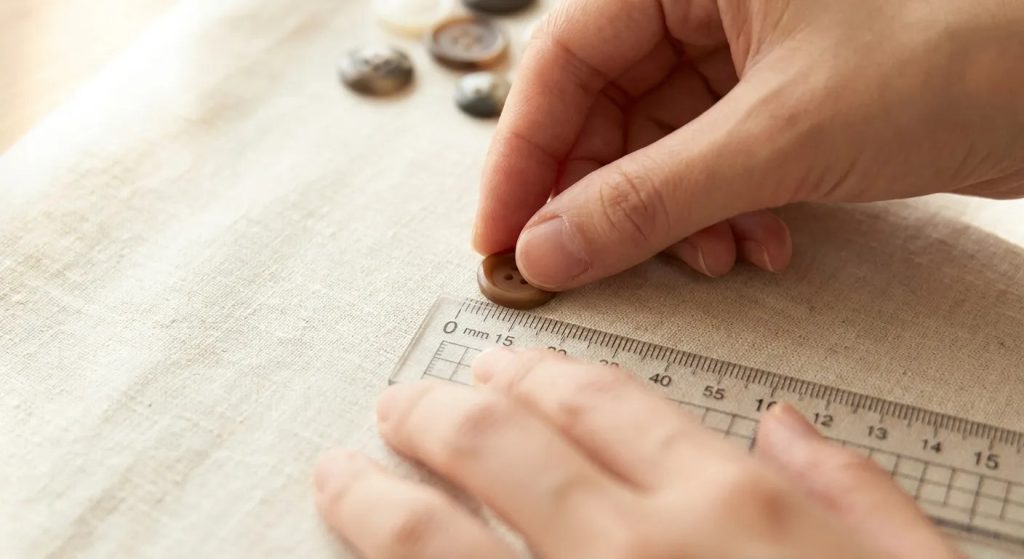
Replacing buttons on a favorite garment? Match the original size so the new button still passes cleanly through the existing hole.
- Lay the button flat and place a millimeter ruler across its widest point.
- Read the diameter in mm. Round to the nearest whole number.
- For a rough check without the button, measure the buttonhole length instead: a buttonhole is usually cut a couple of millimeters longer than the button’s diameter, so a 20mm hole suits an 18 to 20mm button.
- If your fabric is thick, also look at the shank or button height. A little extra height leaves room for the fabric to sit underneath without puckering.
What Size Button Do I Need for Each Garment?
Use this chart as your starting point, then adjust up a size for a bolder look or down a size for something more delicate.
| Garment or use | Recommended size | Good to know |
|---|---|---|
| Baby & kids’ clothes, fine blouses | 10 to 12mm | small and neat; measure the little buttonholes carefully |
| Shirts & lightweight blouses | 11 to 15mm | keeps the placket lying flat |
| Cardigans & light knitwear | 15 to 18mm | the everyday sweet spot |
| Dresses & light jackets | 18 to 20mm | balanced and versatile |
| Blazers & structured jackets | 20 to 23mm | tailored and defined |
| Coats & heavy knitwear | 23 to 25mm | substantial enough to hold thick fabric |
| Statement coats, capes & outerwear | 28 to 48mm | bold, decorative front closures |
Our own ranges follow the same logic. Delicate styles such as cat eye stone buttons start around 11mm for shirts and blouses, while chunky metal coat buttons go all the way up to 48mm for statement outerwear. Most everyday sew-on buttons sit comfortably in the 15 to 25mm range.
How Does Button Size Change the Look?
Size is a styling choice as much as a practical one. Smaller buttons read fine, neat and understated, and let a fabric or pattern stay the star. Larger buttons become a feature in their own right, drawing the eye and giving a coat or blazer a more designed, deliberate feel. If you want your buttons to be the accent, size up; if you want them to blend in, stay at the smaller end of the range for that garment.
How Do I Choose a Size for No-Sew Button Covers?
Button covers work differently. Instead of matching a buttonhole, they clip over the button you already have, so they need to suit the size of that existing button. For the neatest fit, measure your current buttons and pick covers designed to sit over a similar diameter, usually standard flat or slightly domed buttons. Our flower button covers and other no-sew styles are made to snap over everyday shirt and coat buttons, so a quick measure before you order is all you need.
How Many Buttons Should I Buy?
Count the buttonholes on your garment, then add one or two spares so you can replace a lost button later without a mismatch. Pack sizes vary by style: our sets range from about 4 to 10 buttons per pack depending on the design, so check the quantity on the product page and order enough packs to cover the whole piece plus those spares.
Frequently Asked Questions
What is the most common button size? For everyday shirts and blouses, 11 to 15mm is typical, while cardigans and jackets usually use 15 to 23mm. Coats step up to 23mm and larger.
How do I measure a button? Measure the diameter straight across the widest part of the face in millimeters. That number is the button’s size.
What size buttons do I need for a coat? Most coats suit 23 to 25mm buttons, and statement or oversized coats can take 28mm and up.
Are button covers one size fits all? No. They need to suit the size of your existing buttons, so measure those first and choose covers made to fit a similar diameter.
What does “ligne” or “L” mean? It is a traditional button unit. One ligne is about 0.635mm, and 40L equals one inch (25.4mm).
Where to Buy Buttons in the Right Size
Every size in this guide is covered in our collection. Browse the full button collection or our no-sew button covers, check the sizes listed on each product page, and pick the diameter that matches your garment and buttonholes.
Get in Touch
Not sure which size to choose? Our customer service team is happy to help you match the right button to your project.
- Email: [email protected]
- Phone: +86 158-8823-7906
- Address: No. 163, Hanbu Road, Qiaoxia Town, Yongjia County, Wenzhou City, Zhejiang Province, China, 325106
Recommended Reading
- Types of Buttons: A Guide to Styles, Materials and How to Choose
- Button Covers: No-Sew Snap-On Covers to Instantly Upgrade Any Shirt
- Decorative Buttons: A Look at the Shancco Button Collection