
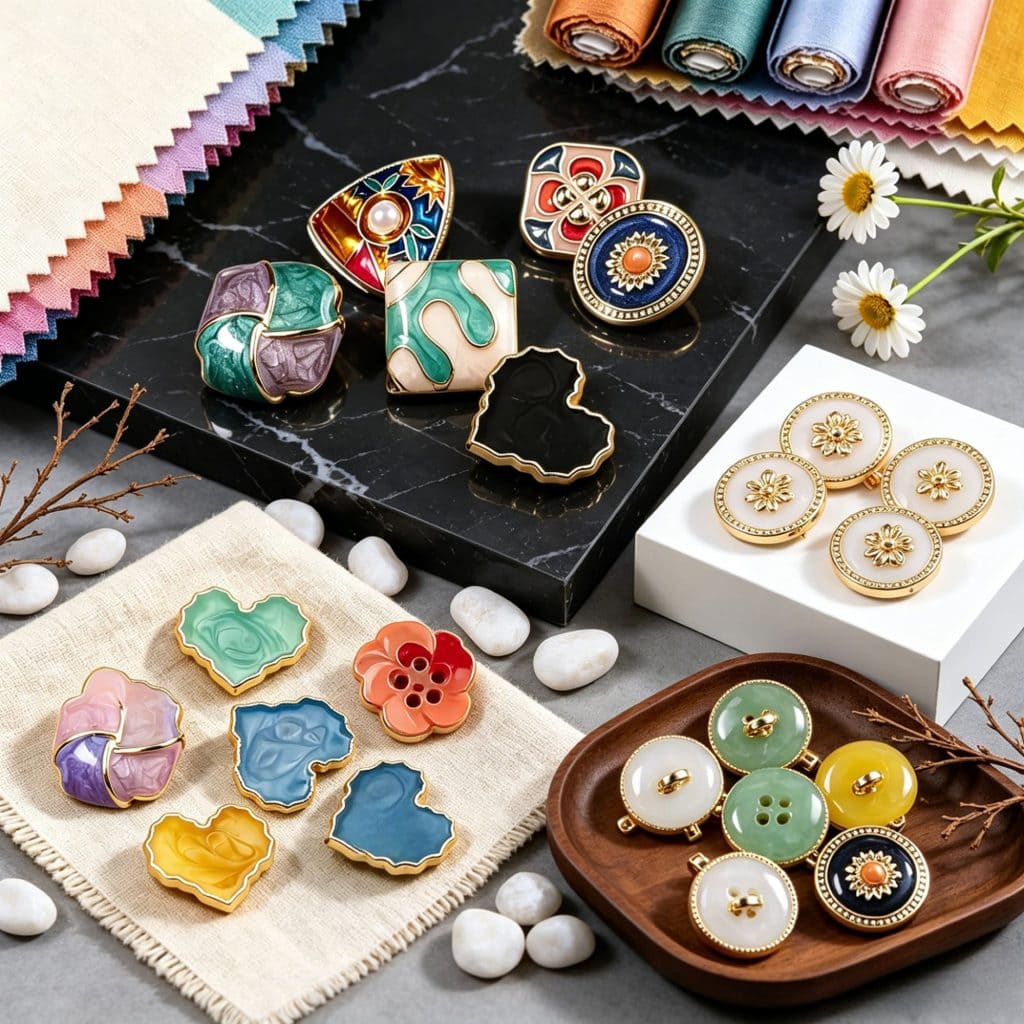
Quick answer: Buttons fall into two main groups by how they attach, shank and sew-through, and into several groups by material, such as metal, resin, glass, enamel, faux pearl, wood and shell. To choose the right ones, match the attachment, material, size and color to your garment and how often it will be washed.
Buttons are one of the smallest details on a garment, but they make a big difference to how it looks and feels. The right buttons can lift a plain shirt, finish a cheongsam or pull a craft project together, while the wrong ones can cheapen even a well made piece. With so many shapes, materials and sizes out there, how do you tell them apart and pick the best ones? This guide breaks buttons down by type, material and size, and shows you how to choose, sew and care for them.
At a Glance
- Two attachment types: Shank (loop back) and sew-through (2 or 4 holes)
- Common materials: Metal, resin, glass, enamel-look, faux pearl, wood and shell
- Sizes: Measured in ligne (L); roughly 10mm to 30mm for most garments
- Decorative vs basic: Plain everyday buttons or detailed, jewelry-like accents
- Best for: Cheongsam, qipao, hanfu, cardigans, coats, blouses, shirts and DIY crafts
- Wholesale: Available in single packs for home sewing and in bulk for trade
What Are the Main Types of Buttons?
Buttons are usually sorted in two ways: by how they attach to fabric, and by what they are made of. By attachment, there are shank buttons, which have a small loop on the back, and sew-through buttons, which have two or four holes on the front. By material, there are metal, resin, glass, enamel-look, faux pearl, wood and shell buttons, among others. Most buttons are a combination of one attachment type and one material, for example a faux jade glass shank button or a four-hole resin flower button.
How Are Buttons Attached? (Shank vs Sew-Through)
The back of a button matters as much as the front, because it decides how the button sits and how you sew it on.
Shank Buttons
Shank buttons have a small loop, or shank, on the back instead of holes on the front. You stitch through the loop, so no thread shows on the face of the button. The shank lifts the button slightly off the fabric, which leaves room for thicker layers to sit underneath, so shank buttons are a favorite for coats, cardigans, cheongsam and any design where you want a clean, decorative front with hidden stitching.
Sew-Through Buttons
Sew-through buttons have two or four holes and sit flat against the fabric. You stitch straight through the holes, so the thread is visible on the front, which can be plain or part of the design. They are quick to attach, easy to replace and sit close to the fabric, which makes them a practical choice for shirts, blouses, lightweight garments and craft projects.
What Are Buttons Made Of?
Material sets the look, weight and care of a button. Use the table below to compare the most common types.
| Material | Look & feel | Best for |
|---|---|---|
| Metal (zinc alloy, gold-tone or silver-tone) | Structured, polished, jewelry-like | Coats, jackets, cardigans, statement pieces |
| Resin | Lightweight, versatile, many colors and patterns | Shirts, blouses, everyday wear, crafts |
| Glass (incl. faux jade / jade-look glass) | Smooth, cool, calm jewel-like glow | Cheongsam, qipao, traditional and vintage wear |
| Enamel-look | Glossy color fill, often with a metal trim | Cardigans, blouses, decorative accents |
| Faux pearl | Soft, classic, feminine sheen | Blouses, knitwear, occasion wear |
| Wood | Warm, natural, matte finish | Casual, rustic and earthy styles |
| Shell | Natural shimmer, subtle and refined | Shirts, blouses, fine garments |
What Sizes Do Buttons Come In?
Button size is measured in ligne, written as L, the international standard for button diameter. One ligne is about 0.635mm, so a 20mm button is roughly 32L. As a rough guide, small buttons around 10mm to 12mm suit blouses, shirts and lightweight garments, medium buttons around 15mm to 20mm suit cardigans, dresses and traditional wear, and larger buttons around 23mm to 30mm suit coats, jackets and statement pieces. When replacing buttons, measure both the old button and the buttonhole so the new ones fit the same opening.
How Do You Choose the Right Buttons?
1. Attachment
Decide between a shank back for a clean, decorative front and thicker fabrics, or sew-through holes for a flat, practical finish on shirts and lightweight pieces.
2. Material
Match the material to the garment and how it will be washed. Metal and glass feel dressy and durable, resin is light and versatile, while faux pearl and enamel-look add a softer, decorative touch.
3. Size
Match the diameter to the weight of the fabric and the size of the buttonhole. When in doubt, measure an existing button.
4. Color and style
Pick colors that either blend in for a subtle finish or stand out as a feature. Decorative buttons such as flowers, hearts and leaves work as small accents, while plain buttons keep the focus on the garment.
What Is the Difference Between Decorative and Basic Buttons?
Basic buttons are designed to blend in and do their job quietly, usually plain rounds in a matching color. Decorative buttons are designed to be seen, with shapes, patterns, stones or metal trims that act like small pieces of jewelry. A quick way to refresh a plain garment is to swap its basic buttons for decorative ones, which instantly makes a cheongsam, cardigan or blouse look more polished and intentional.
How Do You Style Buttons?
Buttons are an easy, low-cost way to change the feel of a garment:
- Swap plain buttons on a thrifted cardigan or blouse for decorative ones to give it a fresh look.
- Run a row of matching decorative buttons down a cheongsam, qipao or hanfu for a coordinated, traditional finish.
- Use a single statement button as an accent on a collar, cuff or pocket.
- Mix tones, such as gold-tone metal with jade-look glass, for a layered effect.
- Stitch leftover buttons onto bags, brooches, hair accessories and craft projects as accents.
How Do You Sew On a Button?
For a shank button:
- Mark the position, thread a needle, double the thread and knot the end.
- Bring the needle up from the back of the fabric to where the shank will sit.
- Pass the needle through the shank loop, then back down through the fabric.
- Repeat several times through the same loop until the button feels secure.
- Finish with a few small stitches on the back and knot the thread.
For a sew-through button:
- Mark the position and bring the needle up through one hole from the back.
- Pass it down through the opposite hole (or across for four holes).
- Repeat several times to secure, keeping the tension even.
- For a small lift, stitch over a toothpick laid across the button, then remove it and wind the thread under the button to form a thread shank.
- Finish on the back with a few stitches and a knot.
How Do You Care for Buttons?
To keep buttons looking their best, hand wash garments with delicate or decorative buttons, or place them in a laundry bag for a gentle machine cycle. Avoid bleach, harsh chemicals and abrasive cleaners, which can dull metal tones, cloud glass and damage enamel-look or faux pearl finishes. Wipe buttons gently with a soft, dry cloth, keep them away from prolonged moisture, and store spare buttons somewhere dry between projects.
Frequently Asked Questions
What are the main types of buttons? By attachment, there are shank buttons and sew-through buttons; by material, there are metal, resin, glass, enamel-look, faux pearl, wood and shell buttons, among others.
What is the difference between shank and sew-through buttons? Shank buttons have a loop on the back and hide the stitching, while sew-through buttons have two or four holes on the front and sit flat against the fabric.
How are button sizes measured? Button size is measured in ligne (L), where one ligne is about 0.635mm; a 20mm button is roughly 32L.
Which buttons are best for cheongsam and traditional wear? Decorative shank buttons in metal or jade-look glass are popular for cheongsam, qipao and hanfu because they look refined and keep the stitching hidden.
Can I just replace buttons to update a garment? Yes. Swapping basic buttons for decorative ones is one of the cheapest ways to refresh a cheongsam, cardigan or blouse.
Rule of Thumb
Choose a shank back and a dressier material such as metal or glass for traditional and outer garments; choose sew-through resin or shell buttons for everyday shirts and lightweight pieces.
Where to Buy
Ready to find the right buttons for your next project? Browse our full range of decorative buttons in metal, resin, glass, enamel-look and faux pearl, across a range of colors, shapes and sizes, and pick the type that suits your garment.
Can You Buy Buttons Wholesale?
Yes. Alongside single packs for home sewing, our buttons are available for wholesale and bulk orders, with trade pricing for boutiques, cheongsam and hanfu makers, tailors, dressmakers and craft studios. If you are buying in volume to stock a shop or for production runs, get in touch for a wholesale quote and bulk availability.
Recommended Reading
- The Complete Buying Guide to Metal Ginkgo Leaf Buttons
- The Complete Buying Guide to Vintage Heart Enamel Buttons
- The Complete Buying Guide to Metal Sunflower Buttons
- The Complete Buying Guide to Vintage Rose Buttons
- The Complete Buying Guide to Flower Buttons
- The Complete Buying Guide to Faux Jade Glass Buttons
- Assorted Vintage Enamel Buttons: A Buying Guide